Invasion of the HomoVikings

Viking Ship to send Good 2On May 21, the Prime Ministry instructed the Government Control Office (Kormányzati Ellenőrzési Hivatal, or KEHI) to launch an investigation of the use of EEA Grant funding for non-government organizations in Hungary.

KEHI is state organization that conducts oversight of the use of public money in Hungary. The EEA Grants are endowments that non-European Union countries Norway, Iceland and Liechtenstein provide to lesser developed EU states, including Hungary, in order to maintain access the union’s internal market as members of the European Economic Area (EEA). Norway provides funding for 96 percent of the EEA Grants, while Iceland and Liechtenstein contribute the remaining 4 percent (see EEA Grants website in English).

The EEA Grants allocated 13.5 million euros in funding to around 150 NGOs in Hungary for the 2013-2017 funding period through the Hungarian Environmental Partnership Foundation (Ökotárs Alapítvány).

The Prime Minister’s Office asked KEHI to audit the Hungarian Environmental Partnership Foundation and the non-government organizations that received EEA Grants during the current funding period after János Lázár, the Orbán government minister who runs the office, accused Norway in early April of indirectly supporting the liberal-green Hungarian opposition party Politics Can Be Different (LMP) through support to pro-LMP NGOs (source in Hungarian).

On May 30, the Orbán government published a list of 13 of these NGOs that it considered to be closely connected to Politics Can Be Different (source in Hungarian): these most prominently included organizations that monitor the corrupt use of state funding (the Transparency International Hungarian Foundation, K Monitor and the Asimov Foundation, which runs the website Átlátszó.hu); civil-rights organizations (the Hungarian Civil Liberties Union); and gay-rights organizations (the Labrisz Lesbian Association and Rainbow Mission Hungary, organizer of the annual Budapest Pride LGBT festival and parade). These organizations have been very critical of the Orbán administration for its opaque use of public money in order to build a pro-Fidesz oligarchy (see Lajos Simicska/Közgép), disregard for civil liberties and indifference toward gay rights (see The Cardboard Men).

The government of Norway strenuously protested KEHI’s audit of the EEA Grants, asserting in a communiqué that it violated agreements the country had signed regarding management of this funding (source in English). The Norwegian Ministry of Foreign Affairs, furthermore,summoned Hungary’s ambassador to Norway, Antal government foreign minister Géza Jeszenszky, on June 5 to formally protest the audit.

On June 10, Minister of External Economy and Foreign Affairs Tibor Navracsics summoned the ambassador of Norway to Hungary to discuss the growing dispute between the two countries.

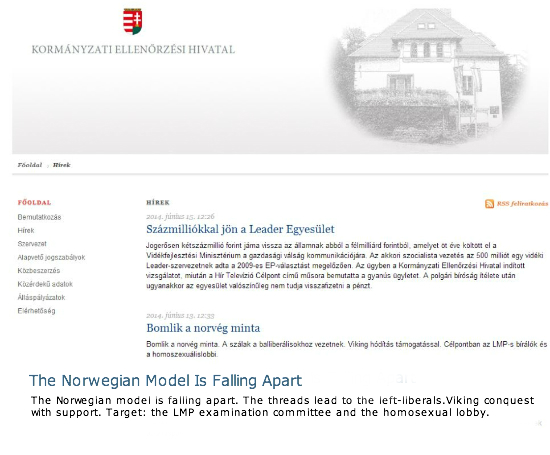
On June 13 KEHI published the following item on the organization’s website (see Orange Files translation of bottom post):


Norwegian Fund Good for Post


In characteristically deceptive Orbánian fashion, KEHI referred to the program Célpont [Target] broadcast on the pro-government television station Hír TV as the source of these claims at the end of the short piece linked to this heading. 

—————————————————————————————————————————————-

The Big Gun Swings into Action

DownloadedFileOn June 11, 2014, the commercial television-station RTL Klub launched an offensive of negative news against the Orbán administration just hours after the National Assembly approved Fidesz-sponsored legislation to tax advertising revenue.

Fidesz designed the progressive tax so that RTL Klub—one of the two most popular television stations in Hungary and the country’s biggest generator of advertising  income—would pay an estimated 63 percent of the total amount of government revenue from the tax in 2014 (see Black Screen of Protest).

Although RTL Klub had gone to great lengths to avoid offending Fidesz before the party adopted the tax on advertisng revenue, the Orbán government has long wanted to curtail the popularity of the German-owned station, which broadcasts mainly action movies and cheap serials, as a means of increasing the viewership of the state-run television stations, which broadcast mainly pro-government news and Hungarian culture.

Fidesz National Assembly Caucus Deputy Chairman Gergély Gulyás said that imposing the bulk of the tax on RTL Klub is justifiable on the grounds that the station “causes great social harm,” referring to the levy as a type of sumptuary tax (egészségügyi termékadó)—that is, a sin tax (source in Hungarian).

The unprecedented RTL Klub negative-news offensive against the Orbán administration has so far focused on the issue of nepotism—on those who have gained unfair advantage and preferential treatment as a result of their close relations to the prime minister. Here is an Orange Files chronology of the main items of negative news regarding the Orbán administration that RTL Klub has broadcast on its Evening Edition (Esti kiadás) news program as part of this offensive in its first ten days:

June 11

Screenshot

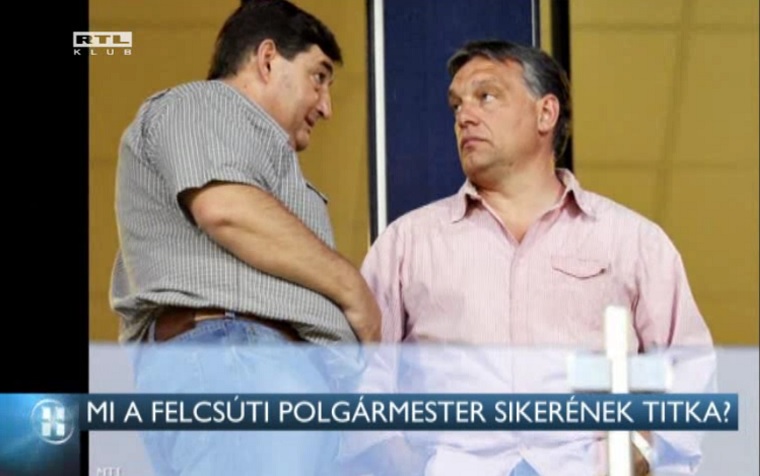
Screenshot from RTL Klub June 11 broadcast.

Subject: The enormous wealth that businessman Lőrinc Mészáros—the mayor of the village of Felcsút where Viktor Orbán grew up and a personal friend of the prime minister—has attained since Fidesz returned to power in 2010 (source in Hungarian).

Claims: The Felcsút mayor’s company, Mészáros and Mészáros, has generated a 500-fold increase in revenue since 2006, making him the 88th richest man in Hungary; that he won more than 1,000 hectares of land in state tenders in 2011 and 2012; and that his friends, relatives and business partners won licenses to operate National Tobacco Shops at 19 of the 21 Auchan supermarkets in Hungary under the state monopoly on the retail sale of tobacco that the Orbán administration imposed in 2013.

Quotes: “No doubt almighty God and the person of Orbán Viktor have played a role in my getting to where I am today” (from interview published in the pro-government weekly Heti Válasz).
Screenshot

Screenshot from RTL Klub June 13 broadcast.

June 13

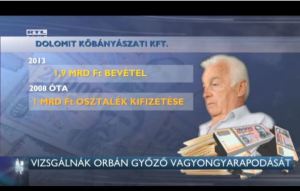
Subject: The investigation that the Democratic Coalition opposition party has launched into state companies that have done business with the dolomite-mining company of Prime Minister Viktor Orbán’s father, Győző Orbán (source in Hungarian).

Claims: Győző Orbán’s company, Dolomit Ltd, has paid dividends of one-billion forints since the start of the global financial crisis and had revenue of 1.9 billion forints in 2013.

June 15

Subject: The appointment of the prime minister’s personal advisor on sports-related issues, Mihály Takács, to serve as the new director of the Ferenc Puskás Football Academy that Prime Minister Orbán founded in his home village of Felcsút in 2006 (source in Hungarian).  

Claims: Takács, who has been friends with the prime minster since they played football together on the FC Felcsút club, receives a salary of 650,000 forints per month as the prime minister’s sports advisor.

Quotes: “Since April, it [the Ferenc Puskás Football Academy] has had a new stadium as well: the Pancho Aréna with seating capacity of 3,900, here in Felcsút, right next to Viktor Orbán’s summer home” (see One Man’s Plaything).

Screen

Screenshot from RTL Klub June 16 broadcast.

June 16

Subject: The lucrative state licenses that a company under the majority ownership of Hungarian-American film producer Andy Vajna, who serves as Orbán government commissioner in charge of renewal of the film industry (filmipar megújításáért felelős kormánybiztos), won to operate casinos in Budapest and Pest County.

Claims: Vajna, who is primarily known for having produced the Rambo and Terminator movies, won five of the seven ten-year licenses that the government recently issued to operate casinos in Hungary though his company, Las Vegas Casinos.

June 17

Subject: The inquiry that the National Investigative Office (Nemzeti Nyomozó Iroda), Hungary’s equivalent to the FBI, has conducted regarding the theft of two smart phones from Prime Minister Orbán’s daughter, Ráhel, during her September 2013 wedding.

Claims: The National Investigative Office has spent 4 million forints to take DNA samples from 26 people as part of the probe, sixteen times the 250,000-forint market value of the phones.

Screen

Screenshot from RTL Klub June 18 broadcast.

June 18

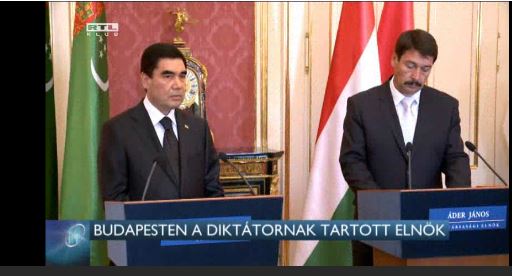
Subject: The official visit of President Gurbanguly Berdimuhamedow of Turkmenistan to Hungary (source in Hungarian).

Quotes: “Today the president of the republic received one of the biggest dictators in the world, according to human-rights activists.” And:  “Human rights are violated in the country [Turkmenistan] every single day. There is no commercial media and only positive news can be reported on state-run channels.”

June 19

screen

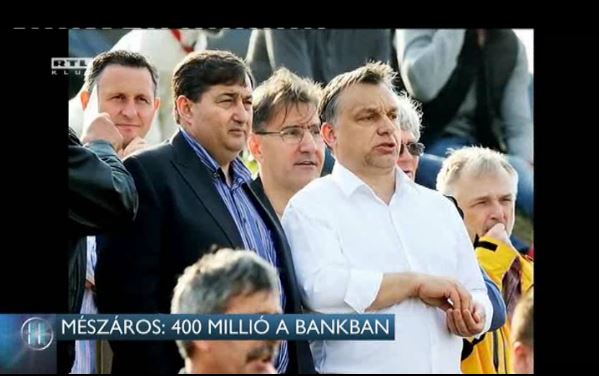
Screenshot from RTL Klub June 19 broadcast.

Subject: The newly released wealth statement of the previously mentioned businessman and mayor of Felcsút, Lőrinc Mészáros (source in Hungarian).  

Claims: According to the wealth statement, the “former gas fitter” and “Viktor Orbán’s good friend” has 400 million forints in his savings account and 20 million forints in cash. The amount of money in Mészáros’s personal bank account has grown from one-million forints in 2011, 20 million forints in 2012 and 200 million forints in 2013. The statement furthermore indicates that Mészáros owns 40 separate pieces of land in Hungary.

June 20

Subject: The emergence of evidence showing that Interior Ministry law-enforcement State Secretary László Tasnádi worked as a domestic-intelligence agent during the late communist-era.

Claims:  Tasnádi was present as an undercover agent at the ceremony marking the reburial of 1956 Hungarian Revolution prime minister Imre Nagy in Budapest on June 16, 1989 at which Viktor Orbán gave the speech that gained him national recognition and solidified his leadership over the newly founded Fidesz party (see Fill in the Blanks).

Government Reaction

The Orbán government has reacted very sensitively to these RTL Klub reports. Following the June 13 exposé on the financial gains that Győző Orbán’s company has recorded over the past years, the Prime Minister’s Office released the following statement (source in Hungarian):

In the opinion of the government, it is improper for RTL Klub to launch a campaign of revenenge because it has to pay taxes in Hungary. It is completely unacceptable that it wants to take revenge on the family members of cabinet members [a kormánytagok családtagjain] for this reason.

RTL Klub quickly responded to this statement, noting that it suggests that RTL Klub does not pay taxes, when in fact the station paid 8.9 billion forints in taxes last year (source in Hungarian).

On June 20, the Prime Ministry issued another communiqué entitled “RTL Klub Regards Hungary as a Colony” containing an inteview with the government minister who heads the office, János Lázár, in which he makes the claim stated in the title and refers to the station as a “corrupt enterprise.”

————

RTL Klub’s negative-news offensive signals first instance in which one of the popular news media in Hungary has expressed explicit and prolonged criticism of the Orbán government since it came to power in 2010. Moreover, RTL Klub has based its offensive not on abstract matters related to democracy and fundamental rights that interest very few people, but on an issue to which average Hungarians are extremely sensitive—that of gaining unfair access to wealth and power as a result of inside connections to government officials. 

The Orbán government has virtually ignored attacks of both types from opposition political forces and media, because it knows that essentially only a few thousand members of the Budapest liberal intelligentsia listen to them (see A Few Thousand Malcontents). However, the government is almost certain use every means at its disposal in order to neutralize the current RTL Klub negative-news offensive, including repressive measures that will serve to further dampen the voice of the independent democratic media in Hungary.   

—————————————————————————————————————————————–

A Few Thousand Malcontents

Demonstrators protest alleged Orbán government constraints on the independent media.

Demonstrators protest alleged Orbán government moves to gain control over the independent media.

On Monday, June 9, the opposition website Kettős Mérce [Double Standard] organized a demonstration outside the Hungarian Parliament Building in Budapest to protest the Orbán government’s alleged recent efforts to curb the influence of the independent commercial media in Hungary.

Specifically, Kettős Mérce held the demonstration to voice concern over two issues that emerged last week in this regard: first, the firing of editor-in-chief Gergő Sáling of the moderately opposition news-portal Origo, allegedly as the result of pressure that the Orbán government placed on website owner Magyar Telekom to do so after Origo two weeks previously broke the news that Prime Ministry director János Lázár had accumulated two million forints (6,600 euros) in hotel bills during three secret trips to Switzerland in 2012 and 2013 (source A and B in Hungarian); and Fidesz’s submission of a bill to the National Assembly that would impose a progressive tax on advertising income, one that is manifestly aimed at undermining the most popular commercial television station in Hungary, RTL Klub (see The Black Screen of Protest). 

Orange Files was at the demonstration. 

———————————————-

Marching across the Chain Bridge.

Marching across the Chain Bridge.

Late as usual and the first glimpse seems to confirm suspicion that two demonstrations in one week about the same issue is too many and attendance will be light, especially considering that it’s really hot outside and also the Pentacost holiday so everybody is just getting home from the first long weekend at Lake Balaton. 

But a look down Constitution Street (Alkotmány utca) shows a surprising number of people—two thousand, maybe even three. Mostly young, sophisticated, fashionable, western. The speaker is from one of the secondary organizers of the demonstration: right there on the stage he makes a call to Magyar Telekom to cancel his mobile-telephone subscription to protest the presumable pressure the company put on Origo to fire chief editor Sáling; then a fiery speaker in a Hawaiian shirt and then a lady who ends to a crescendo of cheering with a long, eclectic list of different types of people who merit representation in an inclusive Hungary—Gypsies, homosexuals, Hungarian minorities from beyond the borders, etc. 

Marching through the Castle Hill tunnel.

Marching through Castle Hill tunnel.

Liberal hearts warmed, the demonstrators march down to the Danube, across the Chain Bridge [Lánchíd] and through the Castle Hill tunnel on their way to the Magyar Telekom headquarters intoning the new slogans: “Free country! Free media!” (Szabad ország! Szabad média!) and “We don’t need Orbán! We don’t need Lázár! The Hungarian People Doesn’t Need an Emperor!” (Nem kell Orbán! Nem kell Lázár! A magyar népnek nem kell császár!). 

Inside the tunnel it is deafeningly loud, terribly hot. Dizzy. Parched. Need a drink bad. 

Down Krisztina Boulevard and arrive to the headquarters. A PR coup: Magyar Telekom has put up tents with free bottled water for the demonstrators. Sit on top of a high wall, quench thirst and look out over the crowd. Several familiar faces— friends, acquaintances, former liberal political figures like Imre Mécs and Tamás Bauer, aging rock star János Bródy. 

The main target of reproach in speeches at this location is János Lázár, the embodiment of cynical and arrogant political power, the man who ostensibly put pressure on Magyar Telekom to fire Sáling, the man who most vociferously and scornfully defended the proposed advertising-revenue tax, the man who will most likely replace Orbán as prime minister when the latter jumps to the position of president in 2017.  

PR coup: Magyar Telekom provides free water to demonstrators.

PMagyar Telekom provides free water to demonstrators.

But you can bet Lázár doesn’t care. Nobody in the Orbán administration does, because they know that twenty-five hundred disgruntled Budapest liberals pose no threat whatsoever to their power and, in fact, may even play the useful role of subjects for the state-run and other pro-government media to portray as perpetual grumblers, people for their supporters to scoff and roll eyes at.

And if they really don’t like it here, let them move to London with all the other malcontents. 

For a few more images of demonstration see Orange Files photo gallery.

—————————————————————————————————————————————–

Black Screen of Protest

Politically neutral television station RTL Klub. Estimated 2014 tax payment: 6.7 billion forints.

RTL Klub: “We Protest Against the Advertising Tax.” Estimated 2014 tax payment: 6.7 billion forints.

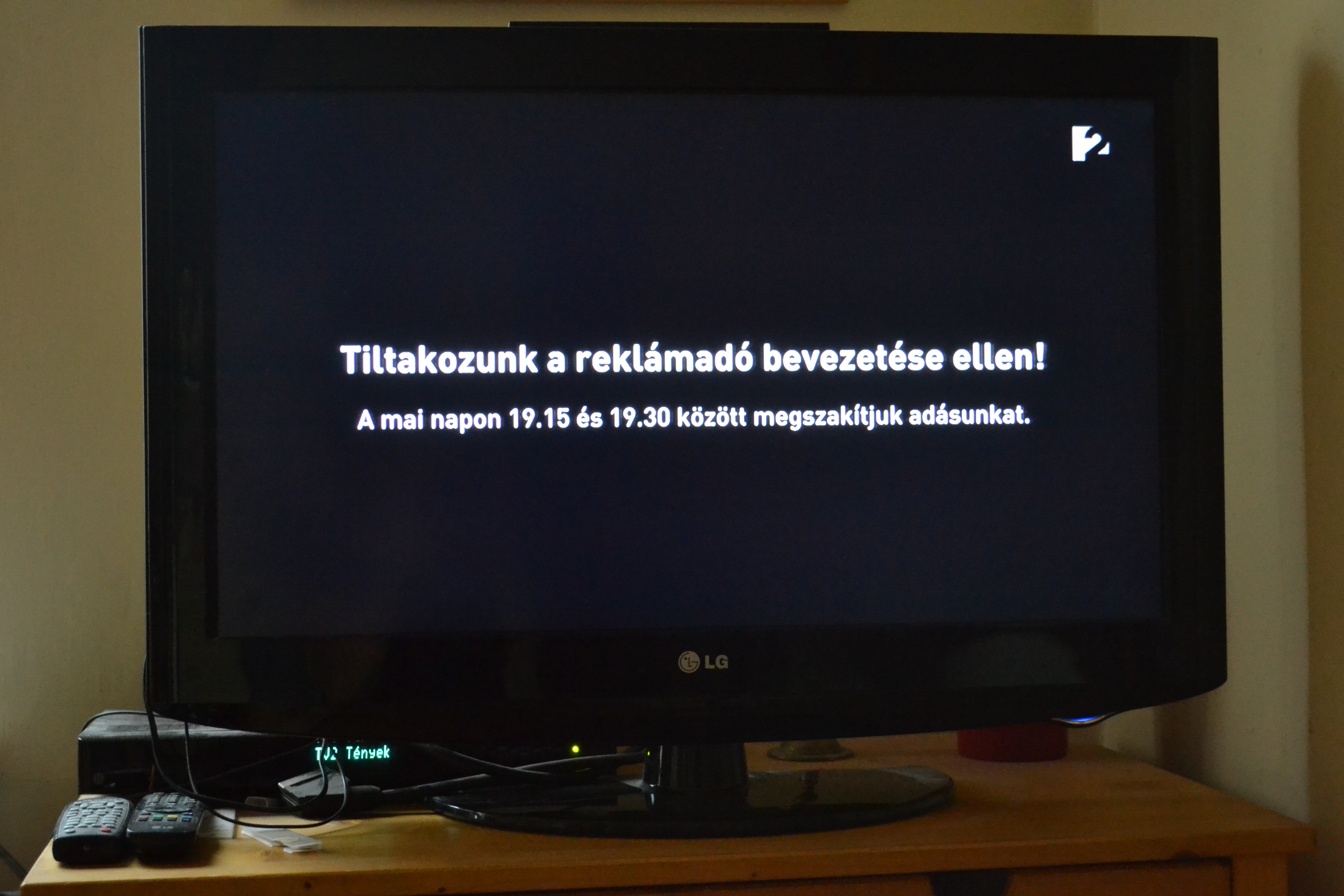
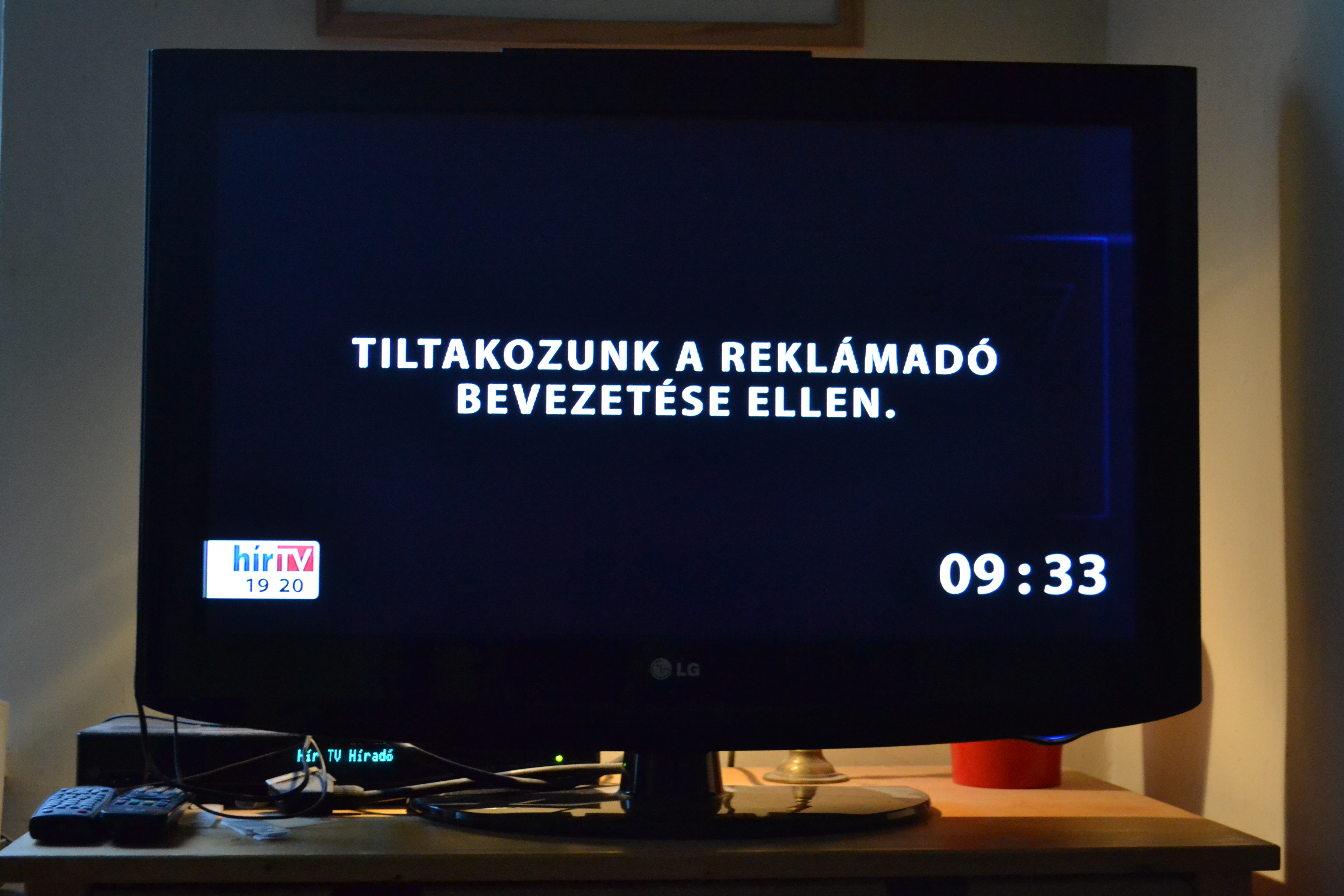
On June 5, 2014, over 100 commercial television and radio stations, websites and newspapers participated a Hungarian Advertising Federation-organized protest against a bill that Fidesz National Assembly representative László L. Simon submitted earlier in the week calling for the introduction of a progressive tax on advertising revenue (source in Hungarian). Between 7:15 p.m. and 7:30 p.m. on this date many of the commercial television stations and websites taking part in the demonstration showed blackened screens with messages expressing objection to the proposed taxes.

Fidesz previously proposed this tax in 2013, but dropped it presumably because the party did not want to have strained relations with the commercial media during the 2014 National Assembly election campaign. The slightly altered new version of the tax would begin at one percent on advertising revenue over 500 million forints and rise to 4o percent on advertising revenue of over 20 billion forints, or about 66 million euros (source in Hungarian). 

Politically neutral television station TV2. Estimated 2014 tax payment: 2.1 billion forints.

TV2: “We Protest against Introduction of the Advertising Tax. Today we will suspend our broadcast between 7:15 p.m. and 7:30 p.m.” Estimated 2014 tax payment: 2.1 billion forints.

The tax appears to be aimed specifically at undermining RTL Klub, Hungary’s most-watched television station, which although politically neutral, broadcasts the kind of programs—American action movies, lurid serials and reality shows—that Fidesz and the Orbán administration want to roll back in favor of Hungarian nationalist culture. The station, owned indirectly by German mass-media corporation Bertelsmann, would pay an estimated 6.7 billion forints pursuant to the proposed tax in 2014, or about 63 percent of the expected 10.7 billion forints in total government revenue from the tax this year (source in Hungarian). RTL Klub would, in fact, likely be the only media outlet to pay the tax in its two highest brackets of thirty and forty percent. 

RTL Klub announced shortly after Fidesz representative Simon submitted the bill that the proposed tax would threaten the station’s existence and, along with it, that of some of the most popular television programs in Hungary, such as the weeknightly 10-minute soap opera Barátok Közt [Among Friends] and the talent contest X-Faktor (source in Hungarian).

Pro-government television station HírTv. Estimated 2014 tax payment: 429 million forints.

Pro-government television station HírTv: “We Protest against the Introduction of the Advertising Tax.” Estimated 2014 tax payment: 429 million forints.

State Secretary in charge of the Prime Ministry János Lázár responded “RTL is threatening the country and blackmailing viewers and political officials. It would be good if they would practice this at home, in Germany, and not in Hungary” (source in Hungarian). 

Fidesz National Assembly caucus chairman Antal Rogán subsequently announced that the entire party supports the tax, also referring to the protest as “blackmail of political officials” (source in Hungarian). 

Not only opposition media have objected to the proposed advertising tax: pro-government television station HírTv and newspaper Magyar Nemzet also participated in the June 5 protest. 

Fidesz caucus Chairman Rogán suggested that the party may be willing to make some minor changes to the bill, ostensibly to mollify criticism from pro-Fidesz media, though would not consider withdrawing the proposed legislation. 

If the National Assembly adopts the Fidesz-sponsored advertising-tax bill in its present form, RTL Klub  will be severely weakened and may even be forced to cease operations. The proposed tax represents another blatant attempt by the Orbán administration to decrease the influence of the independent commercial media in Hungary, thereby increasing that of the pro-government state-run media.   

Opposition website 444.hu. Estimated 2014 tax payment: n.a.

Opposition website 444.hu: “We Protest against Introduction of the Advertising Tax.” Estimated 2014 tax payment: n.a.

—————————————————————————————————————————————–

The Orbán Speeches

Prime Minister Orbán speaking at the Hungarian Parliament Building after taking his oath of office for the new parliamentary cycle beginning in 2014.

Prime Minister Orbán speaking inside the Hungarian Parliament Building on May 10,  2014.

On May 10, 2014, Prime Minister Viktor Orbán gave two speeches—the first in the Hungarian Parliament Building before the newly elected National Assembly after taking his oath of office as head of government for the new parliamentary cycle; and the second immediately afterwards outside the Hungarian Parliament Building before a large crowd of his supporters.

Prime Minister Orbán highlighted the following themes and messages in the speeches:

1) The message that Fidesz’s election victory in 2010 represented a “revolution” ending the two-decade “post-communist era” following the System Change in 1989-1990; 

2) The theme of National unity, particularly with regard to that between Hungarians living in Hungary and those living as minorities in neighboring countries;

3) The theme of Christianity and religion as a unifying force among Hungarians;

4) The message that Hungarians must support Fidesz in order to prevent the internal enemies who controlled “post-communist” Hungary from undermining the country and possibly returning to power;

5) The theme of fighting for national dignity and self-determination vis-á-vis the European Union, embodied in Fidesz’s 2014 European Parliament election slogan “Respect the Hungarians!” 

6) The message that criticism of the Fidesz-adopted electoral system, which gave the party another two-thirds majority in the National Assembly on just over 44 percent of the popular votes in the 2014 national election, is invalid; 

7) The message that the electorate’s reconfirmation of Fidesz’s two-thirds majority in the National Assembly in the 2014 general election represents a mandate to end debate surrounding the validity of the government’s policies and the Fidesz-adopted Fundamental Law

8) The theme of moving toward the political center and fighting extremism in implicit response to the strong showing of the radical-nationalist Jobbik party in the 2014 National Assembly election;  

9) The message that the term “extremism” can be defined very broadly to include such elements as “economic-policy proposals that lack common sense and reason” and “policy that aims to sacrifice the one-thousand-year-old Hungary on the altar of some kind of European United States”; 

10) The theme of anti-liberalism—the subordination of the individual to the collective in the form of the Hungarian nation; 

11) The message that post-revolution Ukraine must provide Hungarians living in the country with autonomy and collective rights; 

12) The message that Hungary’s population decrease must be reversed naturally, through emphasis on the traditional family. 

Prime Minister Viktor Orbán speaking to supporters outside the Hungarian Parliament Building after taking his oath of office for the new parliamentary cycle beginning in 2014.

Prime Minister Viktor Orbán speaking outside the Hungarian Parliament Building on May 10, 2014.

Below are links to Orange Files translations of the speeches with the portions related to the themes and messages outlined above highlighted. These speeches provide a very accurate reflection of the spirit of the Fidesz system and its architect and unqualified master. These speeches will become increasingly interesting as Prime Minister Orbán transforms the ideas and messages expressed in them into concrete policy and action over the coming years and, perhaps, decades.   

Speech 1: to the National Assembly inside the Hungarian Parliament Building (source in Hungarian).

Speech 2:  to supporters outside the Hungarian Parliament Building (source in Hungarian).

—————————————————————————————————————————————–

In Its Own Image

Government Commissioner Géza Szőcs.

Gov’t Commissioner Géza Szőcs.

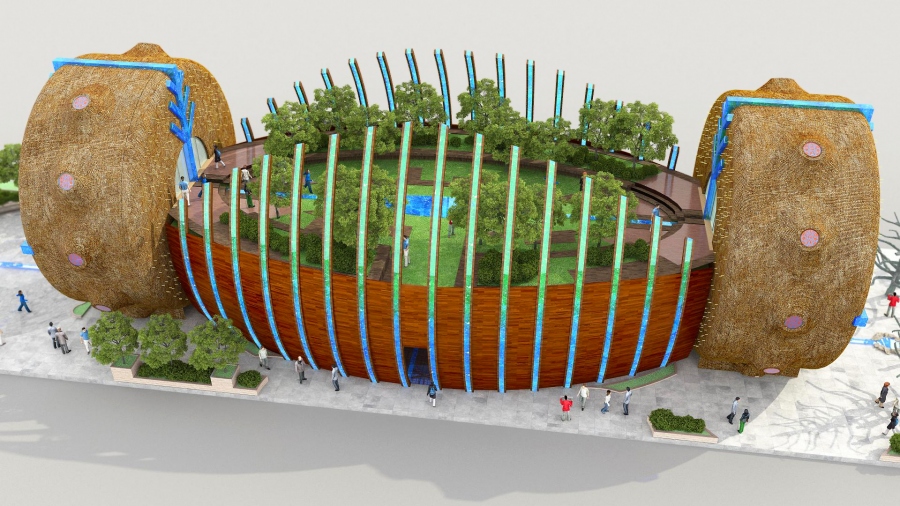
On May 27, Orbán Government Commissioner Géza Szőcs announced that he had selected the design (below) for the Hungarian Pavilion at the Expo 15 world’s fair beginning in Milan, Italy next spring. Commissioner Szőcs, a poet from Transylvania, said that due to technical problems he rejected another design that a professional committee had selected in January (see rejected design). The government will spend 2 billion forints (6.6 million euros) to build the pavilion, which features two shaman drums displaying the Tree of Life element of Hungarian shamanism on either end of a ribbed Noah’s Ark-like structure (source in Hungarian). The designers describe the Hungarian pavilion for Expo 15 as “a place that offers and alternative to the paradigm causing the current global crisis. It makes it possible to feel the beauty and healing power of the natural world and at the same time our responsibility for our Earth and our own health” (source in Hungarian). 


samandob02


The Chamber of Hungarian Architects has asked Commissioner Szőcs to reverse his rejection of the professional jury’s choice for the Hungarian Expo 15 pavilion (source in Hungarian). Furthermore, the architects of the jury’s selected design claim that Commissioner Szőcs’s technical objections are unfounded (source in Hungarian). Hungarian architect and architectural critic József Őrfi, who studied his trade under the father of modern Hungarian nationalist-architecture, Imre Makovecz, published an open letter to Commissioner Szőcs in the pro-government daily newspaper Magyar Nemzet in which he wrote the following (source in Hungarian): 

I thought that I would take it upon myself to tell you, and I even started to explain in detail why, but I still find myself feeling confused. This design is so . . . rather it is so not . . . that is, I just can’t find the words. Suddenly I cannot explain to you in an intelligent way why and to what extent this monstrosity that you want to build in the name of Hungary in Milan is not a solution. I have worked as an architectural critic for seven years, though this has never happened to me before: to criticize this plan from an architectural standpoint is simply impossible. 

pavilon03


—————————————————————————————————————————————–

Sign of Things to Come

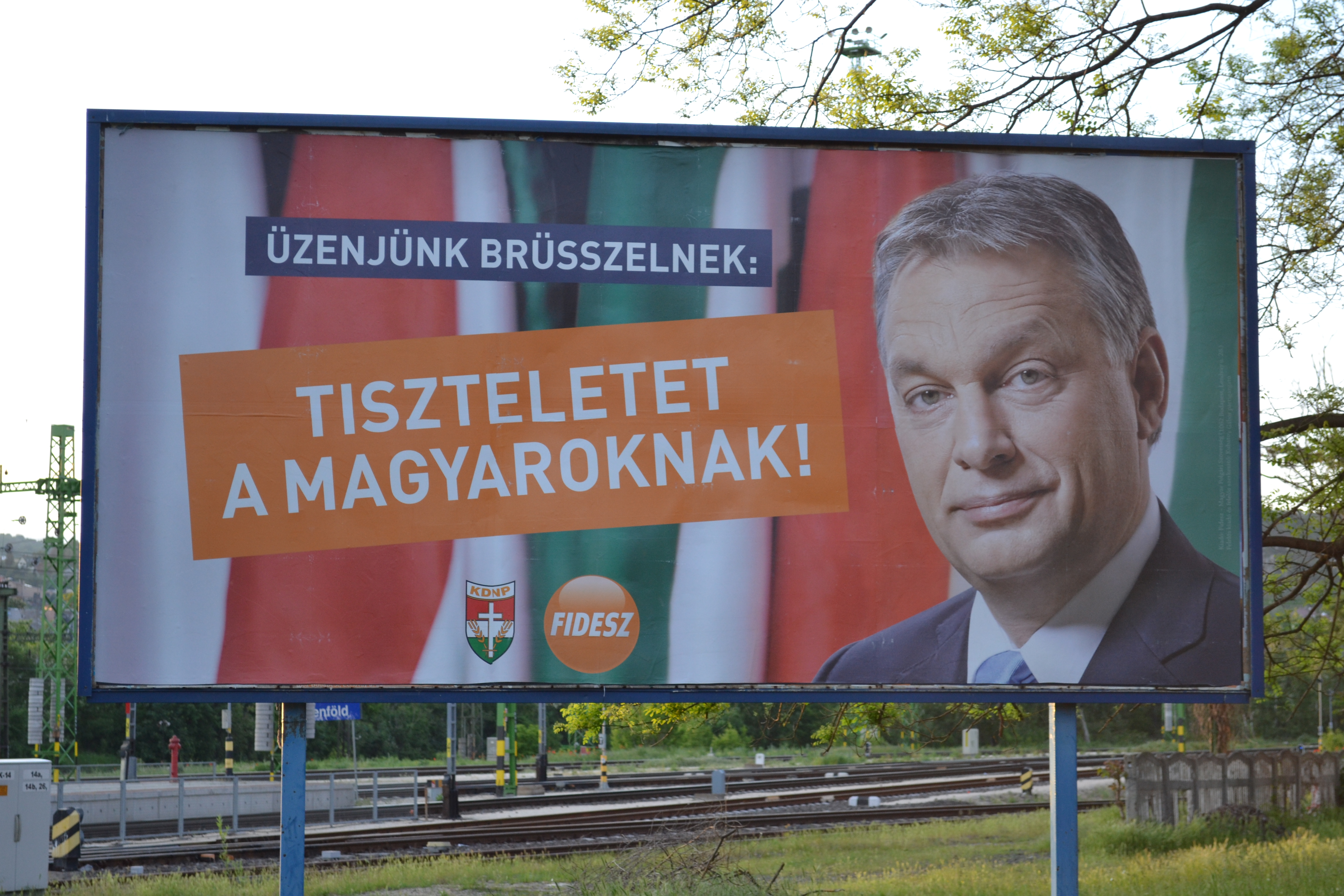
The Orbán government has recently put up signs like that shown below all over Budapest, ostensibly in response to the European Union’s suspension of developmental funding for Hungary until it receives more detailed information regarding the country’s administration of such EU support since the Prime Ministry assumed this task from the National Development Ministry late last summer (see source in Hungarian).

DSC_0909

LET’S TELL BRUSSELS: RESPECT THE HUNGARIANS!

This is the same tactic the Orbán government used during its frequent conflict with the European Union during the 2010–2014 parliamentary cycle: attempt to rally support among the population by suggesting that the EU has attacked or disparaged the Hungarian people as a whole. This ominous sign suggests that the Orbán government’s relations with the European Union are likely to remain just as bad or perhaps become even worse over the next four years as they have been over the past four years.

—————————————————————————————————————————————–

The Jobbik May Day Celebration

Scene from the annual Jobbik May Day celebration.

Scene from the annual Jobbik May Day celebration.

Always the dilemma for the historico-political observer in Budapest on May 1: which reincarnation of the oppressive twentieth-century isms to observe—the Workers’ Party at its May Day celebration in the City Park or Jobbik at its May Day celebration at Hajógyári [Ship Yard] Island.

This year: the neo-communists are on the rise, there is a new freshness to their red, more young people at their events, though they are still very small—only a half percent of the votes in the April National Assembly election. The neo-fascists are also on the rise, very much on the rise, in fact they form the third-largest party in the National Assembly after getting over 20 percent of the votes in the spring elections.

Really no contest: on the bike and up the Danube to Shipyard Island to see Jobbik.

———————————

Jobbik European Parliament representative Krisztina Morvai.

Krisztina Morvai.

To the Big White Tent just in time to see the end of a speech from Jobbik European Parliament representative and former presidential candidate Krisztina Morvai: she predicts that the European Union may not last another ten years, because such an “unjust and inhumane” organization cannot survive too long. The banner hanging behind her reads “Shall We Be Members or Shall We Be Free?” in reference to an 1848 revolutionary poem from Hungarian national poet Sándor Petőfi. 

The tent is full. The crowd of several hundred applauds, especially when she says if the British don’t want Hungarian workers, then “Tesco go home!”

Morvai still uses the exaggerated facial and hand gestures that make it hard to get a good photo of her. She has also become very plump, though pleasantly so. They say her mother was a top model in Hungary back in the communist days.

Next up: Jobbik President Gábor Vona and National Assembly representative Sándor Pörzse, a former television journalist and present editor of the Jobbik weekly Barikád who smiles like he’s been told a thousand times that he has a nice smile.

Gábor Vona (left ) and Sándor Pörzse.

Gábor Vona (left ) and Sándor Pörzse.

Vona uses a very nasty term to describe the Hungarian Socialist Party—can’t remember which one exactly, heard this kind of political invective so many times before it just all kind of melds together in one big destructive and negative jumble. It probably had something to do with filth [mocsok] or refuse because the Jobbik president concludes his statement amid a crescendo of derisive laughter from the audience: “It doesn’t really matter anyway, because the socialists will soon end up in the trash heap of history!”

How on Earth can all of those people sit through these speeches? Must be looking forward to the food and drink, watching the fly settle on the head of the lady in front, thinking of something else.

Take a tour around the grounds as Vona drones on about the newest tragedy to befall Hungary—the expiration of the moratorium on the sale of agricultural land in the country to foreigners (i.e., citizens of other European Union countries).

The sound of a swooping jet from a nearby air show; Vona announces with mock relief: “I know that the EU doesn’t have any armed forces.” More applause, more derisive laughter.

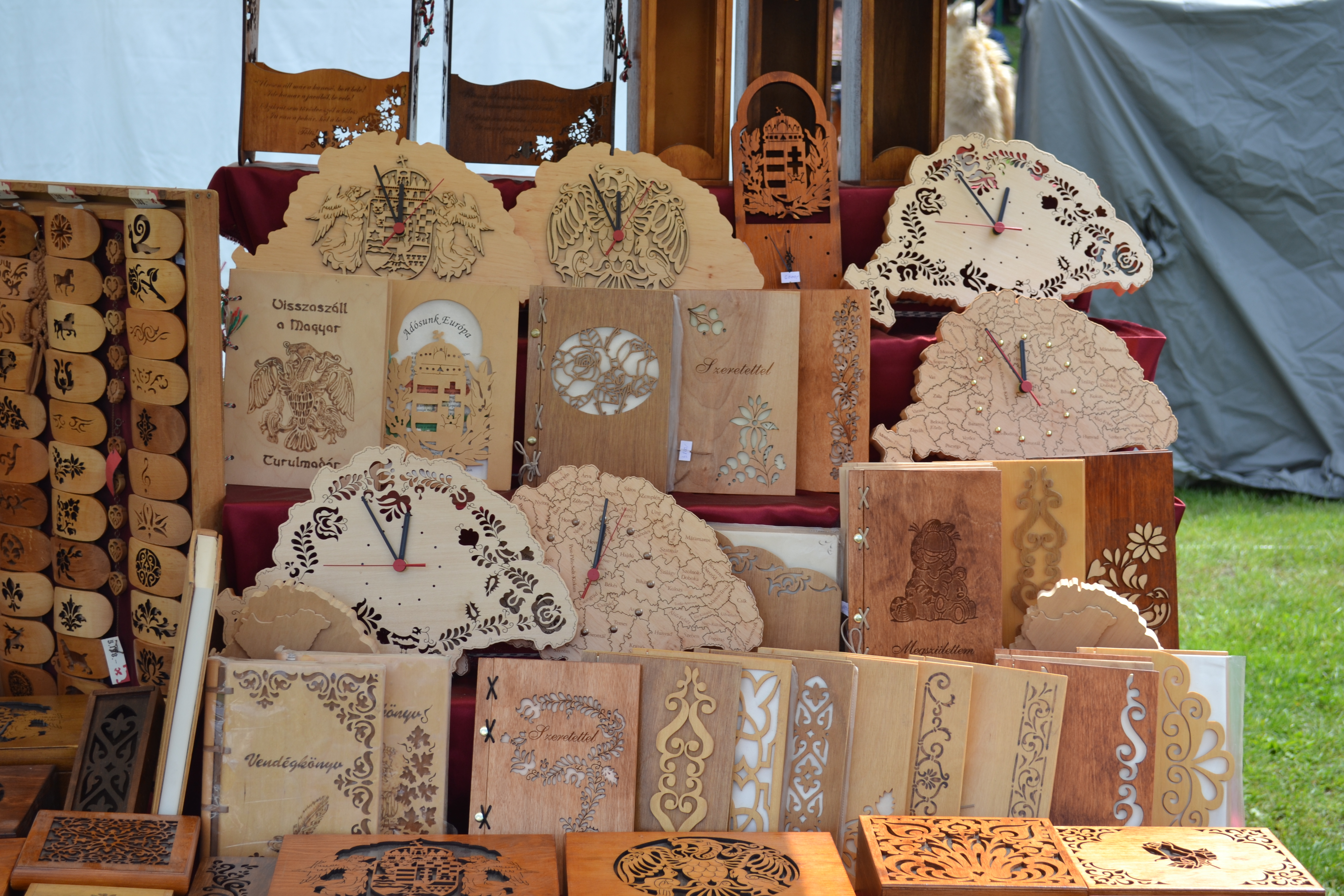
Greater Hungary wall clocks and other nationalist wares.

Greater Hungary wall clocks and engravings.

This event has become much bigger and more sophisticated than it used to be: five years ago it had the feel of a village market fair—a few hundred people milling about, cheap wares, cheap attractions, the low-fi blare of oration and music; today several thousand people, dozens of stands with artisan-made Hungarian folk clothing, crafts and implements (expensive nationalist-kitsch), kids cracking whips with men dressed as traditional Hungarian Great Plain herdsmen, professional staging, hi-fi amplification.

The freshly made potato chips are delicious, but salty to the supreme and raise a mighty thirst. One beer is good, two even better at almost the same price as water. Many others have made the same calculation: faces are ruddy, eyes gleam. Spirits are high on this beautiful May 1 afternoon.

Sit on the grassy slope, listen to speech from Pörzse over loudspeakers and he says something that is actually candid and interesting: Jobbik has been unable to form alliances with other radical-nationalist parties in Europe because those from other countries in the region (Slovakia, Ukraine, Romania, Serbia) are anti-Hungarian due to their Hungarian minority populations, while those from western Europe tend to be “pro-Israel” due to their Muslim minority populations. 

The folly of colliding nationalisms.

DSC_0836

Man dressed as Hungarian herdsman-outlaw speaks to family near stand selling Hungarian folk ware.

Back to the Great White Tent for a few more photos before the long ride home. Vona and Pörzse have turned their sights on Hungarian Socialist Party European Parliament party-list leader Tibor Szanyi, a preferred target ever since he gave the finger to the Jobbik National Assembly caucus during a plenary session of parliament last year. Pörzse says he would debate with Szanyi on the spot, though being a holiday the socialist EP-list leader probably wouldn’t be in condition to do so (in reference to Szanyi’s alleged fondness for drink).

Look down at feet and Krisztina Morvai is there squatting down right there, listening to Vona and Pörzse castigating Szanyi. She is wearing a loose-fitting Hungarian folk skirt and short-cut embroidered blouse. There is a large gap of rather sensuous bareness between them. The top of the crack of her backside is clearly visible (see This Kind of Place).

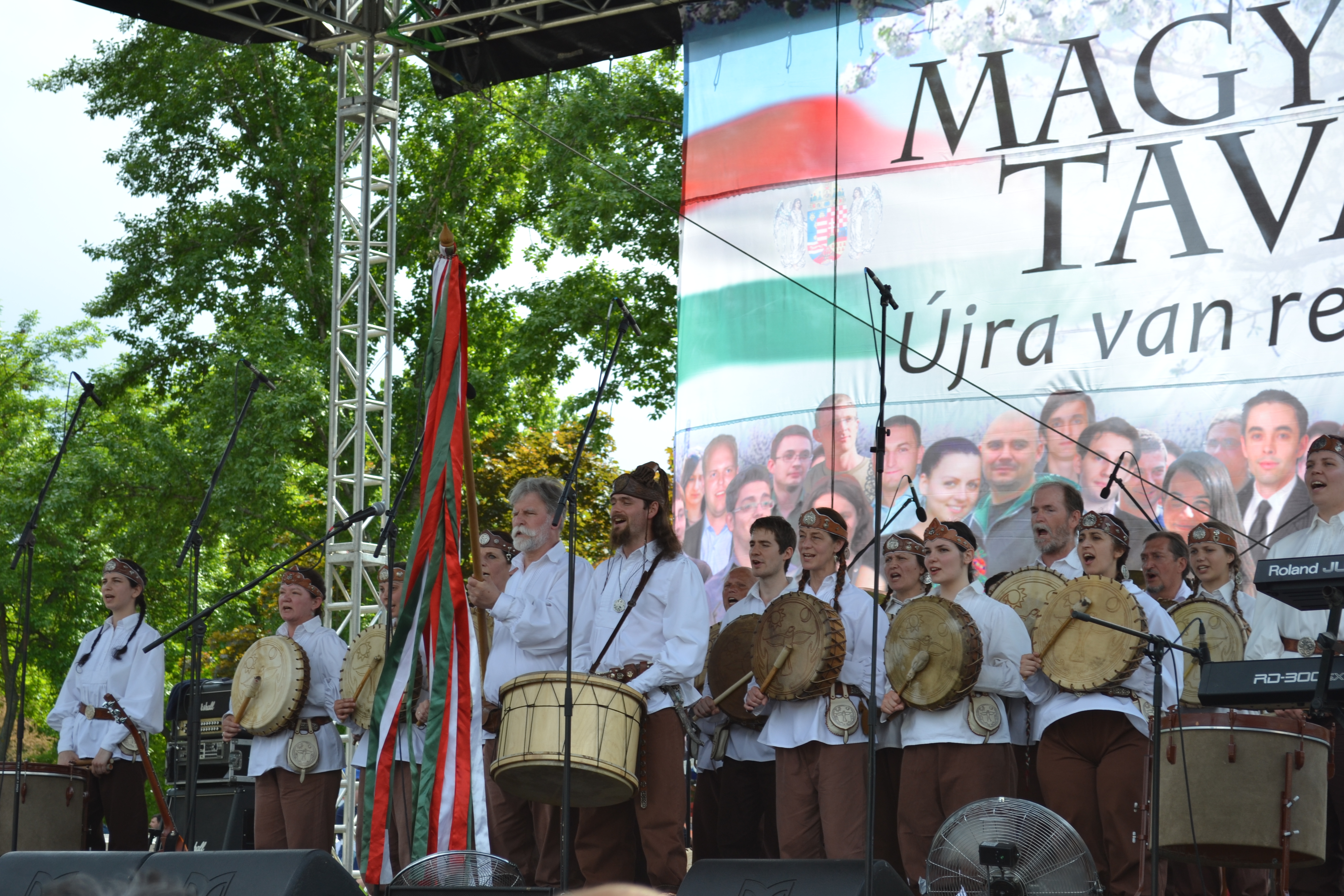
Ancient Hungarian drum ensemble.

Ancient Hungarian drum ensemble.

Stop at the main stage on the way out: a group of drummers in ancient Hungarian headgear and old-fashioned outfits beats out an ominous tribal rhythm. The desperation of radical-nationalist identity-seeking has begun to transcend the boundaries of the absurd in these parts. Then: young women, many of them copiously tatooed, display evening dresses with Hungarian embroidery and nationalist colors (namely the brown-red of the Hungarian uniforms in the 1848 revolution). Up next: concert from the nationalist rock group Ismerős Arcok (Familiar Faces). Heard them last on Szabadság Square in 2007, lead vocalist prompting audience with refrain, cupping ear and holding the microphone outward to catch the mass response: “Ferenc Szálasi!” (name of the prime minister who headed Hungary’s fascist Arrow Cross government in 1944–1945).

Unlock the bicycles from the security fencing around the stage. The crowd growing for the start of the main attraction, the coarse faces of those who suffer from poverty, ill-health and lack of education. Looking hard for deliverance, they think they have found it in the form of a party, a movement and a cultural force that make them proud to be who they are and tell them that all their problems stem from the foul doings of internal and external enemies. One gets the feeling that this whole thing is going to get much bigger before it starts getting smaller. And there may be hell to pay for it. 

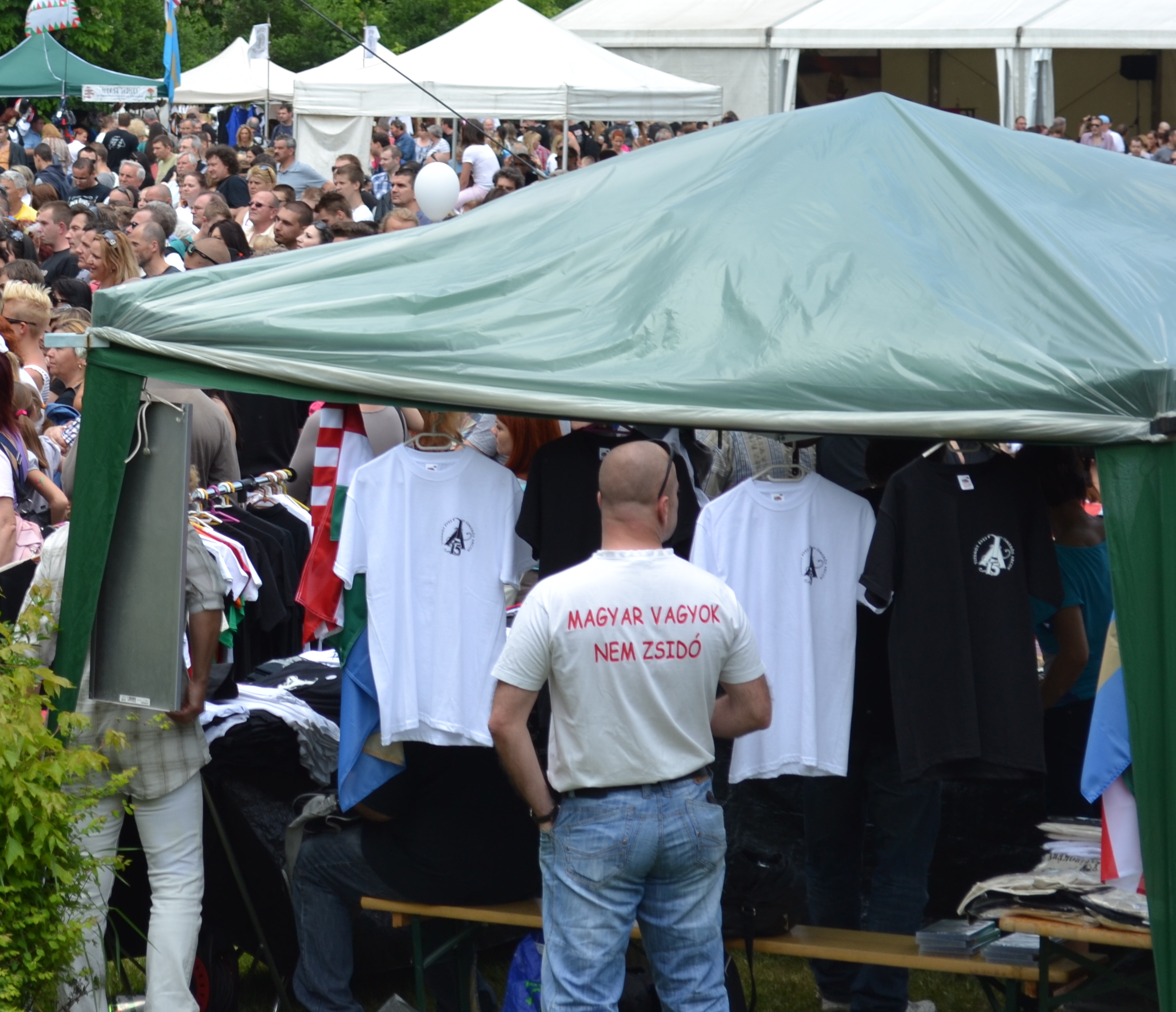
The man standing alongside is wearing a shirt bearing the inscription, both front and back:  “I Am a Hungarian, not a Jew” [Magyar vagyok nem zsidó]. 

See Jobbik May Day Celebration photo gallery.

I Am a Hungarian, not a Jew.

I Am a Hungarian, not a Jew.

—————————————————————————————————————————————–

The Soul of Hungarian Radical Nationalism

Below is a screenshot of the well-visited Hungarian radical-nationalist website Kuruc.info from the morning of April 30, 2014:

KurucinfoJPegGood


Key

Banner Advertisement

Jobbik party emblem (1)

Banner

-Kuruc.info (2)

Unlimitedly Hungarian (3)

Menu 

Anti-Hungarianism (4)

Gypsycrime (5)

Holohoax (6)

Humor (7) 

Letters to the Editor (8) 

Politicalcrime (9) 

Videos (10) 

Jewishcrime (11)

Headlines 

The For a Better Future Trial: according to the Jewish Attorney, the Judge Violated the Rights of the Gypsycriminals with Her Proclamation of the Truth, for Which They Should Receive Damages (12)

The Algiers Memorial to the One and a Half Million French Genocide—Those Who Dare to Pull Down the Cordon Are Riddled with Bullets. A Genocide that Really Did Take Place (13)

At Last: the Police Carried Off the Oy-Veying Jews from Szabadság Square (14)

European Parliament Party-List Leader Debate: Morvai Accepted Banjai’s Challenge (15)

-The Foreign Affairs Ministry Does Not Represent Public Opinion in the Russian/Ukrainian Affair Either: the Majority of Hungarians Do Not Want Sanctions against Moscow (16) 

Police Proceedings Initiated against Cordon Breachers, Who “Last Experienced Passing Contact with Physical Labor 70 Years Ago”  

They Shot the Turncoat Jewish Mayor of Kharkov in the Back—He’s Being Treated in Israel (18)  

Headline Notes

12-Refers to attorney György Magyar’s assertion that Gypsies have the right to launch legal proceedings against Gyula Court of Justice Judge Dr. Erika Mucsi for allegedly racist statements she made about Gypsies in the court’s March 24, 2014 decision not to dissolve the radical-nationalist For a Better Future Self-Defense organization on charges that it has intimated the Gypsy populations of several communities in rural Hungary. 

13- Alleged statement from Hungary’s Ambassador to Algeria Csaba Mohi regarding how police in Algiers would respond to trespassing at the site of the city’s Monument des Martyrs in reference to protesters having pulled down a cordon around the controversial memorial to the 1944 German occupation of Hungary under construction in Budapest (see What Is Truth?). 

14-Reference to the police removal on April 29 of demonstrators from the site at which the German Occupation Memorial is being built in Budapest. 

17-Reference to initiation of legal proceedings against demonstrators whom police carried away from the site of the German Occupation Memorial in Budapest. 

—————————————————————————————————————————————–

Crunching the Election Numbers

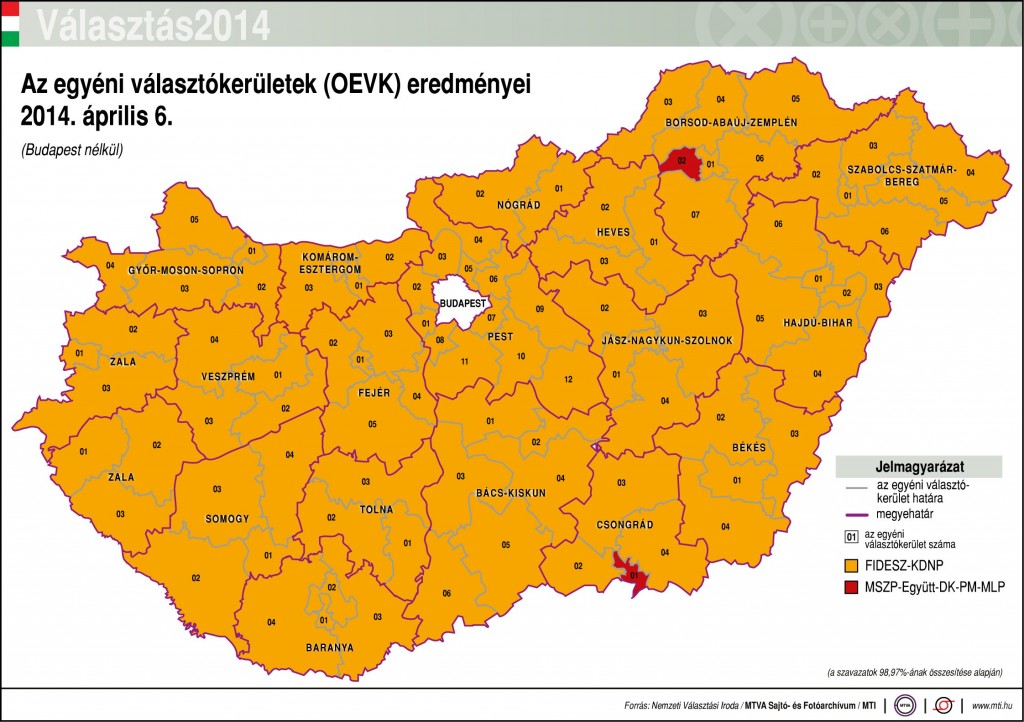
Results in individual voting-districts outside Budapest: orange=Fidesz victory; red=Change of Government victory.

Results in individual voting districts located outside  Budapest: orange=Fidesz victory; red=Change of Government victory.

The FideszChristian Democratic People’s Party (KDNP) alliance won another two-thirds majority in Hungary’s 2014 National Assembly election held on April 6. Fidesz-KDNP won 66.8 percent of the 199 seats in the National Assembly on 44.9 percent of the party-votes cast in the election.

Fidesz-KDNP won 68.1 percent of 386 seats in the National Assembly on 52.7 percent of the party-votes cast in the 2010 general election.

The Fidesz-KDNP super majority will enable the party alliance to enact or rewrite legislation and amend the constitution (called the Fundamental Law) without support from the opposition again during the 2014-2018 parliamentary cycle.

Voting data from the 2014 National Assembly election revealed the following trends compared to 2010 (source for detailed voting results in Hungarian):

Declining Voter Participation

Voter participation declined to 61.2 percent in 2014 from 64.2 percent in 2010.  A total of 4.8 million voters participated in 2014, down from 5.1 million voters in 2010. About 330,000 fewer voters participated in 2014 than in 2010.

Declining Number of Votes for Fidesz

The Fidesz-KDNP governing party-alliance got 44.9 percent of the party votes cast in 2014, down from 52.7 percent in 2010. The Fidesz-KDNP alliance got 2.1 million total party-votes in 2014, down from 2.7 million in 2014.  Fidesz-KDNP got 660,000 fewer party-votes in 2014 than in 2010. Fidesz got more party votes (2.3 million) in both the 2006 and 2002 elections, both of which it lost to the Hungarian Socialist Party.

Increasing Number of Votes for Jobbik

Jobbik officials on election night: why so glum?

Jobbik officials on election night: why so glum?

Radical-nationalist party Jobbik got 20.2 percent of the party votes cast in 2014, up from 16.7 percent in 2010. Jobbik got 985,000 total party-votes in 2014, up from 855,000 in 2010. Jobbik thus received 130,000 more party votes in 2014 than in 2010.

Increasing Number of Votes for the Democratic Opposition

Democratic-opposition parties in the socialist-liberal Change of Government [Kormányváltás] party-alliance and the green party Politics Can Be Different got 25.6 percent of the party votes cast in 2014, up from 24.2 percent in 2010. Democratic-opposition parties got 1.5 million party votes in 2014, up from 1.37 million in 2010. Democratic-opposition parties therefore received 125,000 more party votes in 2014 than in 2010.

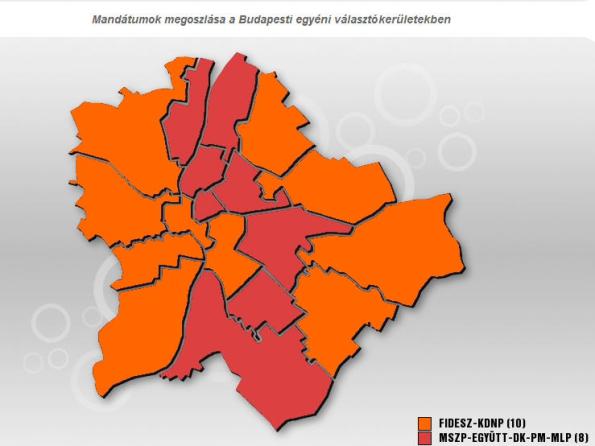
Budapest voting-district results: orange = Fidesz victory; red = Change of Government victory.

Budapest voting-district results: orange = Fidesz victory; red = Change of Government victory.

Increasing Success of Democratic Opposition Candidates in Individual Voting Districts

Candidates from the Change of Government party alliance won in 10 of 106 individual voting-districts in Hungary in 2014: eight districts down the center of Budapest as well as one district in the city of Miskolc and one district in the city of Szeged. In 2012, the Hungarian Socialist Party (the main party in the Change of Government Alliance) won two of 210 individual electoral districts, both of them in the traditionally working-class Angyalföld [Angel Field] neighborhood in the northern part of the Pest side of Budapest.

Fidesz-KDNP won all of the other individual electoral-districts in Hungary in both 2014 and 2010.

Jobbik Failure in Individual Voting Districts?

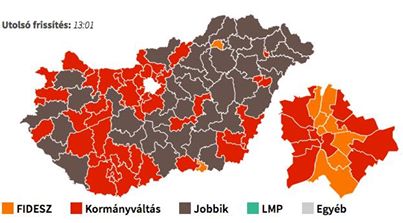
Second-place finishers in individual voting-districts: brown=Jobbik; red=Change of Government; orange=Fidesz.

Second-place finishers in individual voting-districts: brown=Jobbik; red=Change of Government; orange=Fidesz.

Jobbik candidates failed to win elections in any individual electoral-districts. Jobbik President Gábor Vona came the closest, losing to the Fidesz-KDNP candidate in his home district in the city of Gyöngyös in northern Hungary by 650 votes (source in Hungarian). Other high-profile Jobbik candidates, such as Jobbik Vice-President Előd Novák, performed poorly in individual electoral-districts. (Novák finished in fourth place, behind the Politics Can Be Different candidate, in the second electoral-district of Budapest).  

However, Jobbik candidates took second place behind Fidesz-KDNP candidates in 41 of 106 individual electoral-districts in Hungary. Jobbik candidates took second place in 41 of 88 individual electoral-districts outside the city of Budapest (source in Hungarian).
Overwhelming Support of New Hungarian Minority Voters for Fidesz 

A total of  128,712 Hungarian citizens voted via mail in 2014. Most of these voters were Hungarians living as minorities in countries surrounding Hungary, who gained the right to vote in National Assembly elections via the Orbán government’s introduction of expedited procedures for members of such minorities to acquire Hungarian citizenship and elimination of the stipulation in the previous Election Law that citizens must live in Hungary in order to participate in elections.

A total of 95.5 percent of those who cast ballots via mail voted for Fidesz-KDNP (see source in Hungarian). 

The Communist Party: Still Small, but Gaining 

The Workers’ Party (Munkáspárt), the legal successor to the Hungarian Socialist Workers’ Party that ruled Hungary from 1956 until 1990, won 27,695 party votes in 2014, up from 5,606 votes in 2010. The Workers’ Party received 0.6 percent of all party votes, the fifth highest among all parties and the highest among all parties that qualified to participate in the elections, though failed to exceed the five-percent party-vote threshold required for representation in the National Assembly.

The Newly Founded “Business Parties” Likely Helped Fidesz  

Four more years.

Four more years.

Of the 14 small parties that took part in 2014 National Assembly election, only two—the Workers’ Party and the Party of Greens (Zöldek Pártja)—received more votes than the number of signed recommendation-slips they collected in order to qualify for participation in the election. These parties, many of which did not even exist at the beginning of the year, took advantage of the Orbán administration’s 2011 easing of the conditions that parties need to satisfy in order to participate in National Assembly elections—and gain access to a minimum of 150 million forints (about 500,000 euros) in government funding. 

These so-called “business parties” may have swayed voting results in favor of Fidesz-KDNP in three individual electoral-districts, particularly the 15th electoral district in Budapest in which the Fidesz-KDNP candidate defeated the Change of Government candidate by 22 votes, while the Together 2014 business-party candidate (not to be confused with former prime minister Gordon Bajnai’s Together 2014 party that was part of the Change of Government alliance) got 187 votes (source in Hungarian).

Fidesz Benefited Greatly from the Distribution of Fragmentary Votes for Winning Candidates to Party Lists 

The Orbán government’s 2011 National Assembly Election Law classified votes for victorious candidate in excess of those needed to win elections in individual electoral-districts as so-called “fragmentary votes” (töredékszavazat) added to votes for parties on the national party-list (in addition to those cast for losing candidates in individual electoral-districts as previously). The Fidesz-KDNP won six seats in the 2014 National Assembly election as a result of this change (source in Hungarian).

Conclusion

Recently concluded 2014 National Assembly election in Hungary proved that Fidesz has remained by far the most popular political party in the country. However, Fidesz received just 45 percent of the party vote in the 2014 general election, compared to 52.7 percent in 2010. Fidesz was able to maintain its two-thirds majority in the National Assembly in spite of the party’s sigificant decline in popularity as a result of the extension of voting rights to Hungarians living outside Hungary, the inclusion of more parties on the ballot and, most significantly, the distribution of fragmentary votes for winning candidates to party-list votes pursuant to the Election Law that Fidesz-KDNP representatives passed in 2011. Extremist parties such as the radical-nationalist Jobbik and, to a much lesser degree, the Workers’ Party gained the most from Fidesz’s loss in popularity, though democratic-opposition parties benefited somewhat as well. Fidesz will doubtlessly use its renewed two-thirds majority in the National Assembly to further skew the electoral system in the party’s favor before the next national election. However, these changes will not likely prevent Fidesz from losing a significant number of seats in the National Assembly in 2018 if the party’s popularity continues to decline over the next four years as it did over the past four years. In this event, Jobbik appears to be the party that is gaining the popular support necessary to assume the role of kingmaker. 

—————————————————————————————————————————————–