Hungary and the Great Migration

used

Prime Minister Viktor Orbán (photo: EPA).

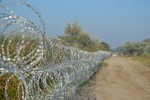
On September 15, 2015 the Orbán government will close the remaining gap in the Hungarian-Serbian border and begin to either incarcerate or expel migrants who traverse the razor-wire fence that has been erected along this frontier.

The government is establishing three large extraterritorial “transit zones” near the location at which migrants have been streaming into Hungary from Serbia over the past weeks in order to quickly process asylum requests from those who cross the fence after September 15.

Since the government considers all migrants who pass into Hungary from Serbia to be economic immigrants rather than refugees on the grounds that they have not fled war in the latter country, virtually none of them will receive asylum. Those who do not receive asylum will be immediately expelled from Hungary back to Serbia.

See entire post.

—————————————————————————————————————————————–

And So They Left

DSC_0417

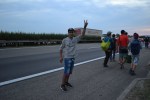
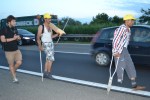
Suddenly, imperceptibly, about 1,500 Syrians left the teeming squalor of the Eastern Railway Station in Budapest on September 4, 2015, to make the nearly 200-kilometer trip to Austria on foot along the M1 highway. Below is a gallery of photos that Orange Files took of their trek about 20 kilometers outside of Budapest. They are traveling the same path to the West as several hundred thousand Hungarians did at the end of the Second World War in 1945 and after the Hungarian Revolution of 1956.

Click on any photo to see gallery view.

See all 12 photos.

Below is an Orange Files video of the first third of the column of Syrian refugees marching along the M1 highway:

—————————————————————————————————————————————–

The Fields Are Speaking Pashto

This field is speaking Pashto.

The murmur of strange tongues.

The fields are speaking Pashto here in southern Hungary along the border with Serbia. And Arabic and Dari and Urdu. The murmur of these languages in the shrubs and scrubby meadows, in the trees along the roadside ditches, amid the stalks of corn and sunflower. Everywhere the now familiar sounds of unfamiliar words, spoken quietly, asking “what to do? where to go?—when to make a run for the next hiding place?”

As the refugees stream into Hungary along the railway line that is the lone remaining gap in the razor-wire fence erected along the entire length of the border with Serbia, the many who know some English speak as one: “We no want to give fingerprint in Hungary. We want to go to Germany (or Sweden or Norway or Holland). We no want to stay here.”

See entire post.

————————————————–

Click on any photo to see gallery view.

See all 30 photos.

—————————————————————————————————————————————–

Scenes from the Great Migration 2: the Eastern and Western Railway Stations

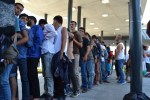
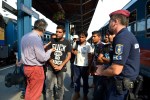
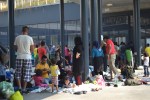
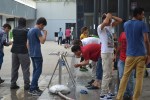
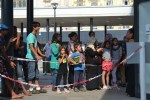
Below is a gallery of photographs that Orange Files took of migrants at the Eastern and Western railway stations in Budapest on August 26 and August 27, 2015. The NGO Migration Aid is providing food, medical care and donated clothing, blankets and other assistance to the migrants, who are waiting at the railway stations for trains to Austria or camps in Hungary. More than 150,000 migrants have crossed into Hungary from Serbia since the beginning of the year, including around 3,000 per day beginning in late August. Nearly all of these migrants have subsequently left Hungary en route to western Europe, primarily Germany. The Orbán government and state-run media refer to these migrants, the large majority of whom are from Syria or Afghanistan, as “border violators” (határsértő) or “illegal immigrants” (illegális bevándorló). The government is preparing to send the Hungarian army to the border to help control the growing influx of migrants.

Click on any photo to see gallery view.

See all 21 photos.

—————————————————————————————————————————————–

Stage 3: Dehumanization

Zsolt Bayer (left) and Viktor Orbán celebrate the anniversary of Fidesz's foundation.

When the figurative becomes literal: Bayer serves Orbán at the 2009 celebration of Fidesz’s foundation.

Zsolt Bayer is a pro-Fidesz journalist who, along with Prime Minister Viktor Orbán, was one of 37 founding members of the party in 1988. Bayer served as one of the main organizers of the five pro-government Peace March demonstrations that took place in Budapest in 2012 and 2013. Although Bayer maintains no formal position in the Orbán government or Fidesz (though he did serve as the party’s press secretary for the first five years of its existence), his stated viewpoints can be regarded as an accurate reflection of the opinions of many party supporters and Orbán administration officials. Speaking about Bayer at the journalist’s 50th birthday party in February 2013, National Assembly Chairman László Kövér (another fellow founding member of Fidesz) said  “We have lived together through good and bad, trouble and joy. Not one single time have we disavowed one another, nor shall we” (source in Hungarian). Below is an Orange Files translation of an editorial that Bayer published in the August 15, 2015 issue of the largest-circulation pro-government political daily, Magyar Hírlap (source in Hungarian).

Unavoidable? 

It began on Tuesday. On the Island of Kos, in Greece, where seven thousand intruders (betolakodó) arrived recently. The population of the Island is not quite thirty thousand. The horde poured down on these thirty thousand unfortunate Greeks. The life of the island became paralyzed. Already several months ago. The tourists fled, the hotels are empty, the population is angry and desperate. The horde knows nothing about this. It just continues to flow. And it began on Tuesday. . . . 

See entire post.

—————————————————————————————————————————————–

Scenes from the Great Migration: the Eastern Railway Station

DSC_0144

Migrants from Afghanistan.

On this day there are only a few hundred migrants waiting for the next train to Austria in the pedestrian underpass outside the Eastern Railway Station in Budapest, about half the number as there were a few days ago. The majority of them still young men in their twenties, though more and more families with young children and elderly are among those whom state-run television and radio call “border violators” (határsértő).

Today: an extended Iraqi family, including a blind women in her 80s, the relatives of a man who claims to be a former government energy official; several women with babies just a few weeks old, almost certainly born on the road; a group of barefoot men who calmly ignore stern orders to “go, go away!” from the Migration Aid distribution point until they get shoes; a Pakistani migrant who gives an open-handed Hungarian beggar a few coins from his purse.

See entire post.

Click on any photo to see gallery view.

See all 12 photos.

—————————————————————————————————————————————–

The Alienator

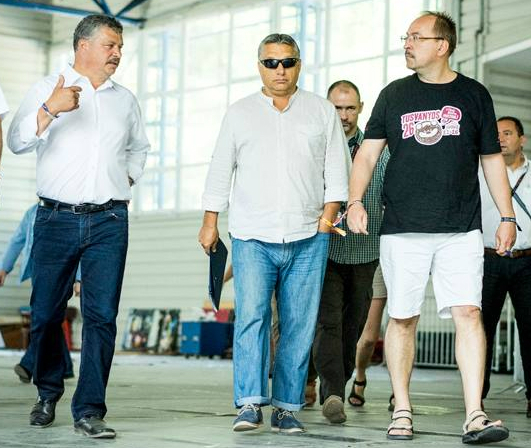
Prime Minister Orbán (center) arrives for his annual speech at the Tusványos Summer University (photo: Viktor Orbán Facebook page).

Prime Minister Orbán (center) arrives for his annual speech at the Tusványos Summer University and Student Camp (photo: Viktor Orbán Facebook page).

Following his annual speech at the Tusványos Summer University and Student Camp (Nyári Szabadegyetem és Diáktábor) in Tusnádfürdő (Băile Tușnad), Romania, on July 25, 2015, Prime Minister Viktor Orbán of Hungary put photos of the event on his personal Facebook page (source in Hungarian). These photos included an image of lapel pins being sold at the summer university, some of which depict the Greater Hungary—which included Transylvania and other territories that are now part of Romania—that existed for 500 years during the Middle Ages (until 1526) and reemerged for 50 years at the time of the Austro-Hungarian Monarchy (until 1918).

Photo from Prime Minister Orbán's Facebook page.

Photo from Prime Minister Orbán’s Facebook page.

On July 27, Romania’s Ministry of Foreign Affairs protested Prime Minister Orbán’s display of these images of Greater Hungary on its Facebook page, declaring that “Unfortunately, only one day after he called for pragmatism and ‘efficent’ Romanian-Hungarian relations, Hungarian Prime Minister V. Orban chose to post on his Facebook account images including symbols of Greater Hungary and of the Székely Land. The Hungarian prime minister’s personal promotion of these revisionist symbols is completely unacceptable . . .” (source in Romanian).

Later on July 27, the Orbán government issued the following response on its website (source in English):

The Romanian Ministry of Foreign Affairs has criticised Prime Minister Viktor Orbán for uploading pictures on his Facebook page which it says depict revisionist symbols. Responding to a question on the issue from Hungarian news agency MTI, Press Chief of the Prime Minister’s Office Bertalan Havasi said that the images are of historical symbols. 

During a television interview later that evening, Prime Minister Victor Ponta of Romania characterized Prime Minister Orbán as “offensive” and “provocative” (source A in Hungarian and source B in Romanian). 

For information regarding Prime Minister Orbán’s 2015, 2014 and 2013 speeches at the Tusványos Summer University and Student Camp see: He Talks Again; Proclamation of the Illiberal Hungarian State; and The Friends You Keep.

—————————————————————————————————————————————–

He Talks Again

Picture 5Thick neck sticking up out of his collarless non-Western shirt he talks again at the Fidesz “summer university” in Transylvania about the decline of Europe and the West and the fateful perils that face the Hungarian nation (and against which he, alone, can defend it). This year’s catastrophe: Muslim “illegal immigrants” who threaten to adulterate Hungarian Christian-nationalist culture and commit acts of terrorism and who have caused nothing but problems everywhere they have gone, such as Sweden, where the frequency of reported rape is the second highest in the world (behind Lesotho). “Europe is for the Europeans!” he says in his throaty voice, delivering the same old alarmist message that has had an astounding range of actors over the decades since he began with Li Peng, Pol Pot, Jaruzelski and Rákosi in 1989 (see Fill in the Blanks).

See entire post.

—————————————————————————————————————————————–

Beginning of the End II: the Leaders

Below are a some photographs that Orange Files took of leaders of anti-government demonstrations in Budapest from September 2006 to September 2009. It is the second of a four-part gallery that started with Beginning of the End I: the Demonstrators and will eventually include photographs under the categories Cops and Signs and Symbols.

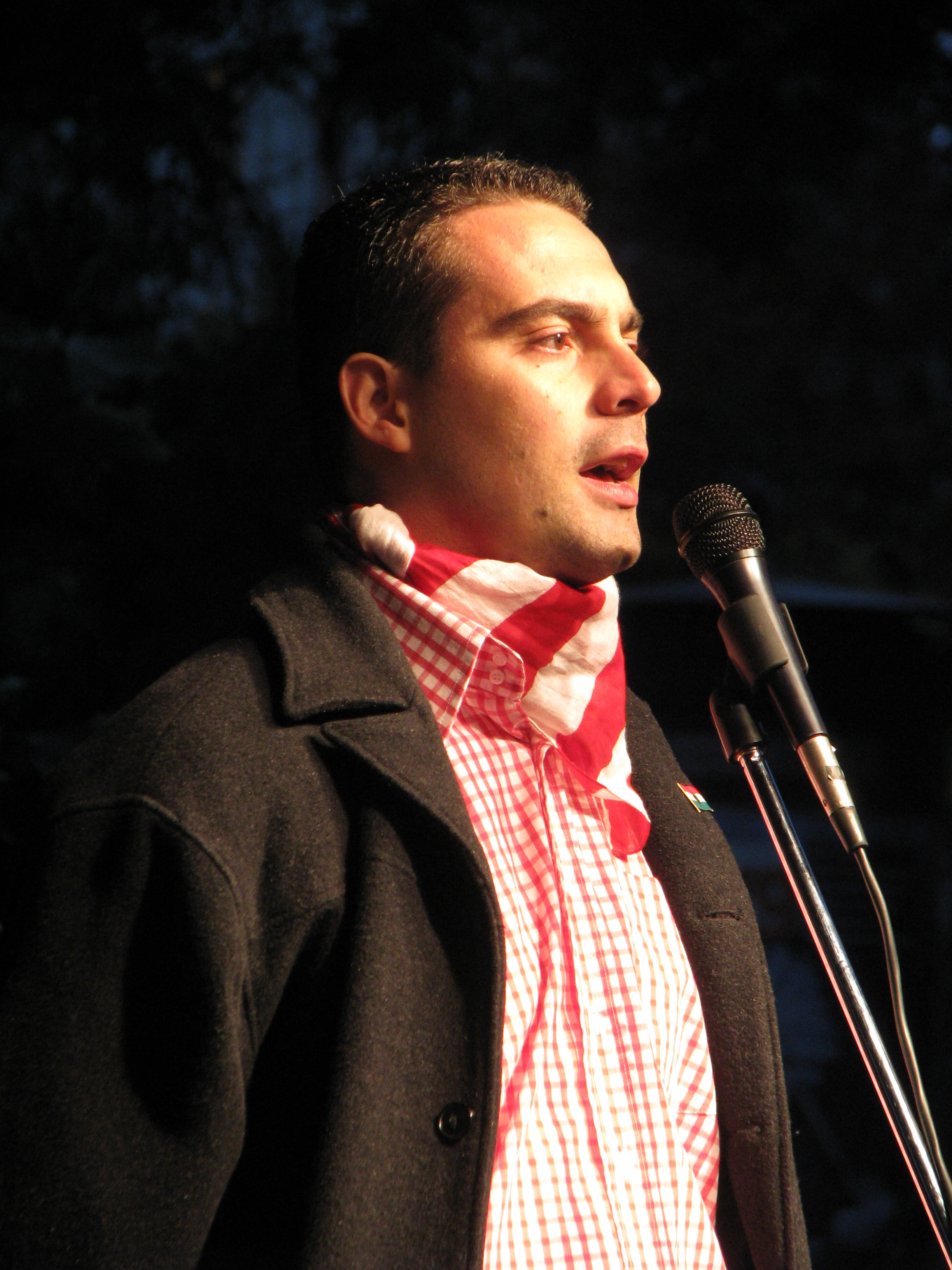
Jobbik President Gábor Vona speaks at anti-government rally before march on Budapest Opera House (October 22, 2007).

Jobbik President Gábor Vona speaks at anti-government rally before march on Budapest Opera House (10/22/2007).

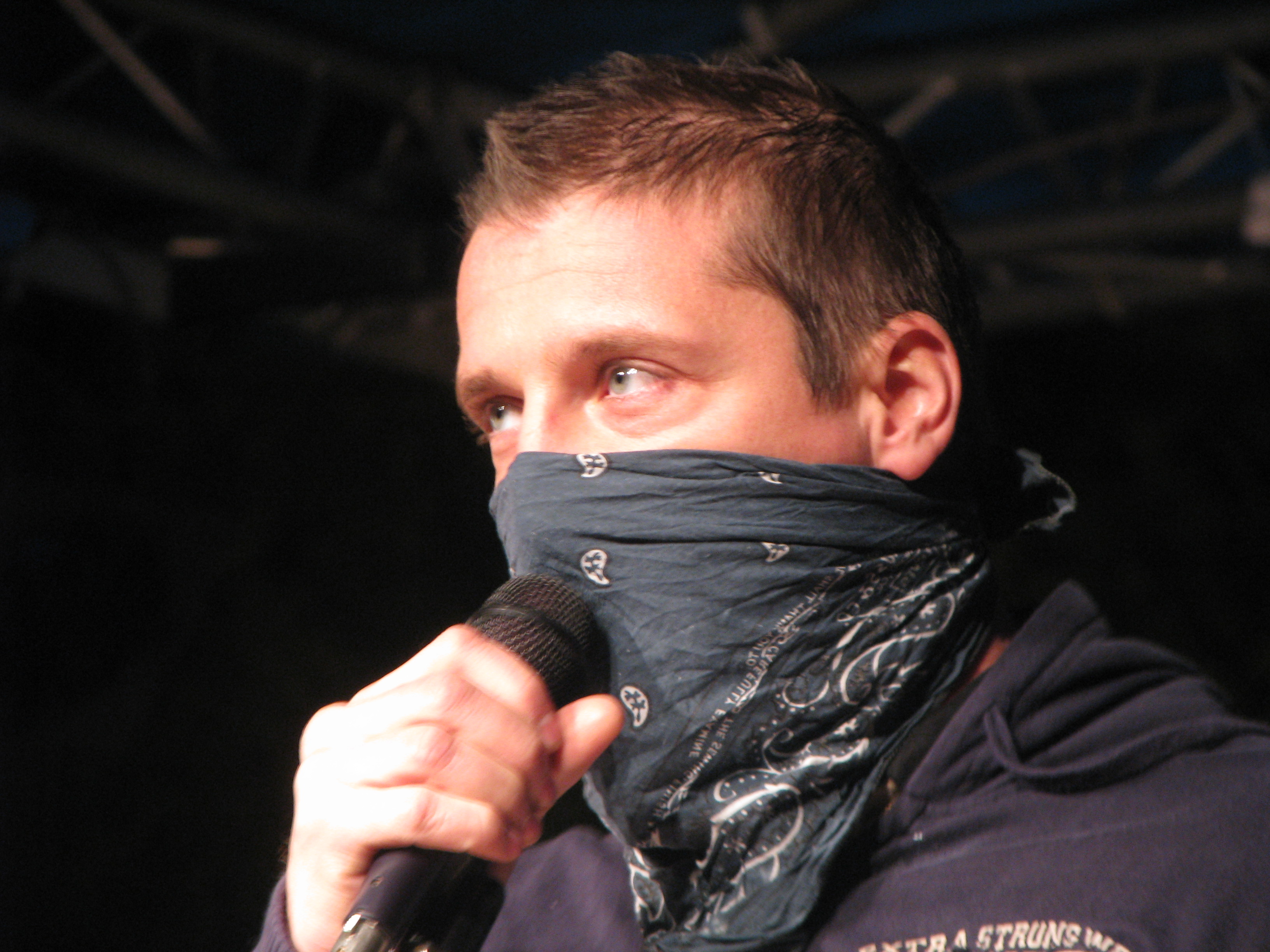
"The city is ours, the streets are ours, death to the Israeli water cannons!": Protest leader György Budaházy speaks at anti-government rally before march on Budapest Opera House (October 22, 2007).

“The city is ours, the streets are ours, death to the Israeli water cannons!”: Protest leader György Budaházy speaks at anti-government rally before march on Budapest Opera House (10/22/2007).

Reformed pastor Loránt Hegedűs Jr. speaks in front of an Árpád-Striped Flag during an anti-government rally on the March 15 national holiday (March 15, 2008).

Reformed pastor Loránt Hegedűs Jr. speaks in front of an Árpád-Striped Flag during an anti-government rally on the March 15 national holiday (3/15/2008).

Kossuth Square protest leader László Gonda wearing water-cannon dye-stained pants at anti-government demonstration (April 21, 2007).

Kossuth Square protest leader László Gonda wearing water-cannon dye-stained pants at anti-government demonstration (4/21/2007).


See all 28 photos.

———————————————————————————————————————————-

Fortress Hungary

Security fence along Bulgaria's border with Turkey (photo: Reuters).

Security fence along Bulgaria’s border with Turkey (photo: Reuters).

On June 17, 2015, Minister of External Economy and Foreign Affairs Péter Szijjártó announced that the government of Prime Minister Viktor Orbán had initiated construction of a four-meter-high fence along the entire 175-kilometer length of the Hungarian-Serbian border in order to obstruct the flow of illegal immigrants into Hungary from Serbia.

The number of immigrants seeking asylum in Hungary has increased dramatically over the past two years, rising from 18,900 in 2013 to 42,777 in 2014 and 24,000 in the first two months of 2015. Most of these asylum-seekers have been from Kosovo, though an increasing number of them are from other countries, notably Syria and Afghanistan (source in English).

Most of those seeking asylum in Hungary arrive to the country illegally via Turkey, Greece, Macedonia and, finally, Serbia. A total of 54,000 people entered Hungary illegally in the first five months of 2015, or about 360 per day (source in Hungarian).

See entire article.

—————————————————————————————————————————————–