Beginning of the End I: the Demonstrators

On the afternoon of September 17, 2006, Hungarian Radio broadcast the following excerpt from a leaked recording of a private speech that Hungarian Socialist Party (HSP) Prime Minister Ferenc Gyurcsány had made to HSP officials a few months previously:

We fucked up (elkúrtuk). Not a little, but a lot. There is not another country in Europe where they’ve botched things up as we have. . . . Obviously we lied our way through the last year and a half, two years. It was totally clear that what we were saying wasn’t true. 
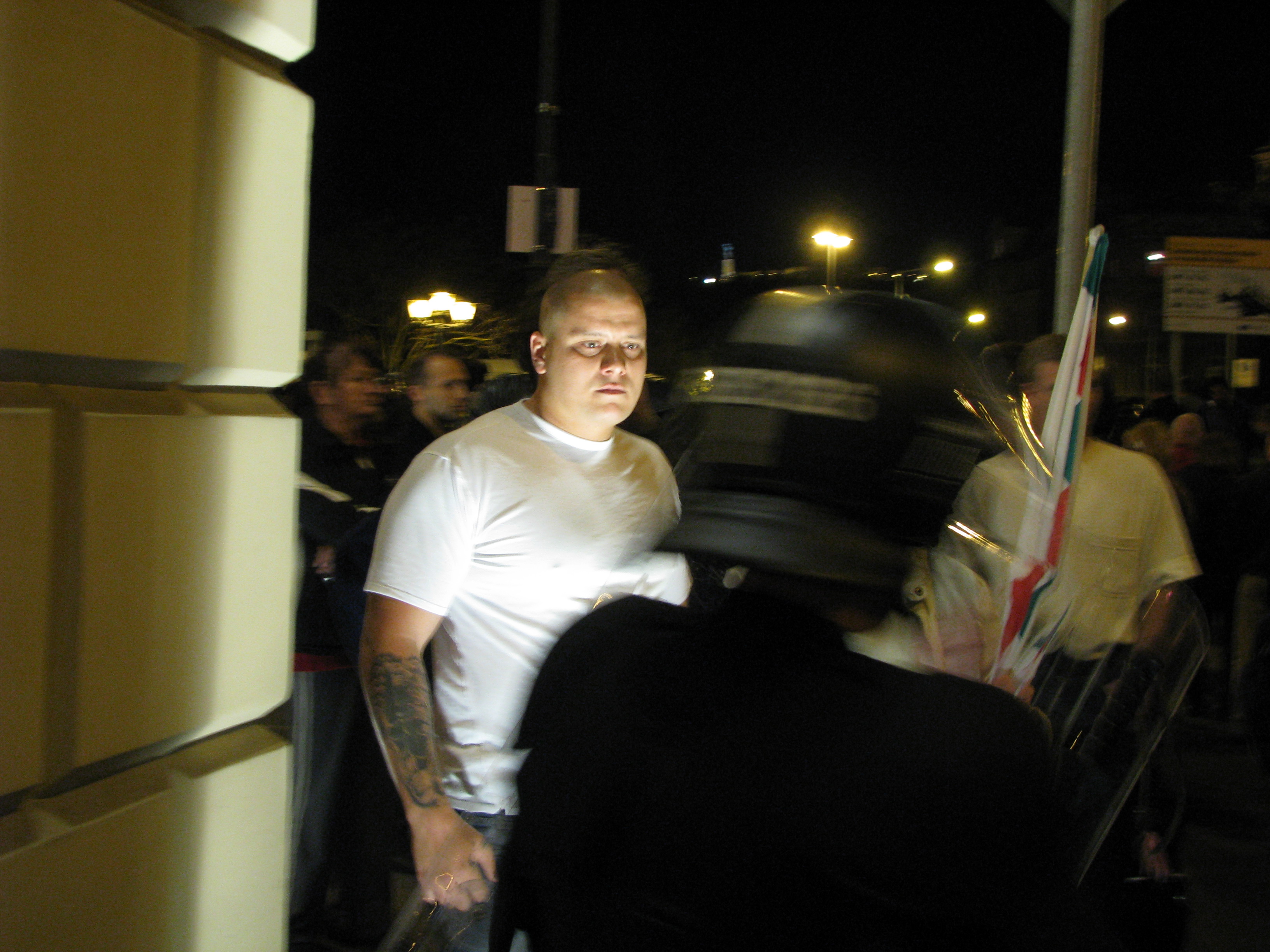
Anti-government demonstrator faces riot cop on  Clark Ádám Square (April 1, 2008).

Anti-government demonstrator faces riot cop on Clark Ádám Square (April 1, 2008).

Within a few hours of the broadcast, thousands of people had gathered outside the Hungarian Parliament Building in Budapest to demand the prime minister’s resignation. During larger demonstrations at the parliament building the following evening, about 1,000 radical nationalists and football hooligans overwhelmed police guarding the nearby Hungarian Television headquarters, laying waste to much of the building in a fiery all-night rampage.

The eruption of political tension that had long been building in Hungary had taken place, setting off three years of anti-government demonstrations that in their expression of antipathy toward liberal democracy, the free market, the European Union and the West in general foreshadowed the spirit and ideology of the second government of Prime Minister Viktor Orbán that came to power in 2010.

Below are a some of the photographs that Orange Files took of participants in these anti-government demonstrations and other political events in Budapest over the period from September 2006 to September 2009. It is the first of a four-part gallery that will include photographs of demonstration leaders, cops, and signs and symbols.

See all 70 photos.

—————————————————————————————————————————————–
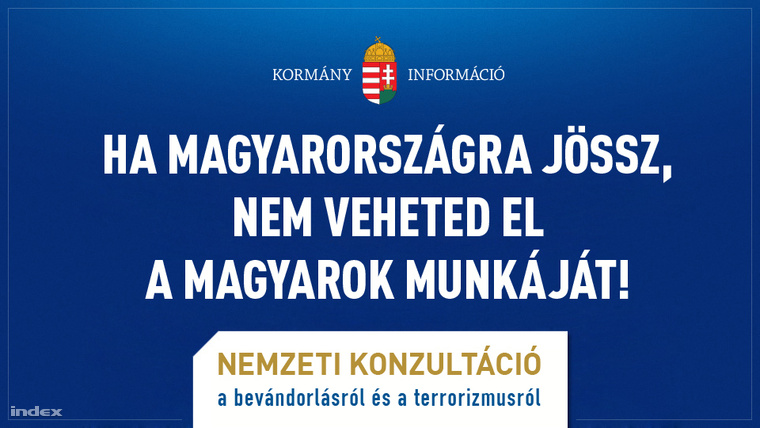
Sign War I

IF YOU COME TO HUNGARY YOU CANNOT TAKE AWAY THE WORK OF THE HUNGARIANS!

IF YOU COME TO HUNGARY YOU CANNOT TAKE THE WORK OF THE HUNGARIANS!

In June 2015, the Orbán government launched a 381-million-forint (1.2-million-euro) “informational campaign” connected to its National Consultation on Immigration and Terrorism (source in Hungarian). This campaign consists primarily of billboard signs displaying the following three messages, in Hungarian, to migrants who arrive to Hungary (source in Hungarian showing design of all three signs):  

IF YOU COME TO HUNGARY YOU CANNOT TAKE THE WORK OF THE HUNGARIANS! 

IF YOU COME TO HUNGARY YOU MUST RESPECT OUR CULTURE! 

IF YOU COME TO HUNGARY YOU MUST RESPECT OUR LAWS! 

See entire post

—————————————————————————————————————————————–
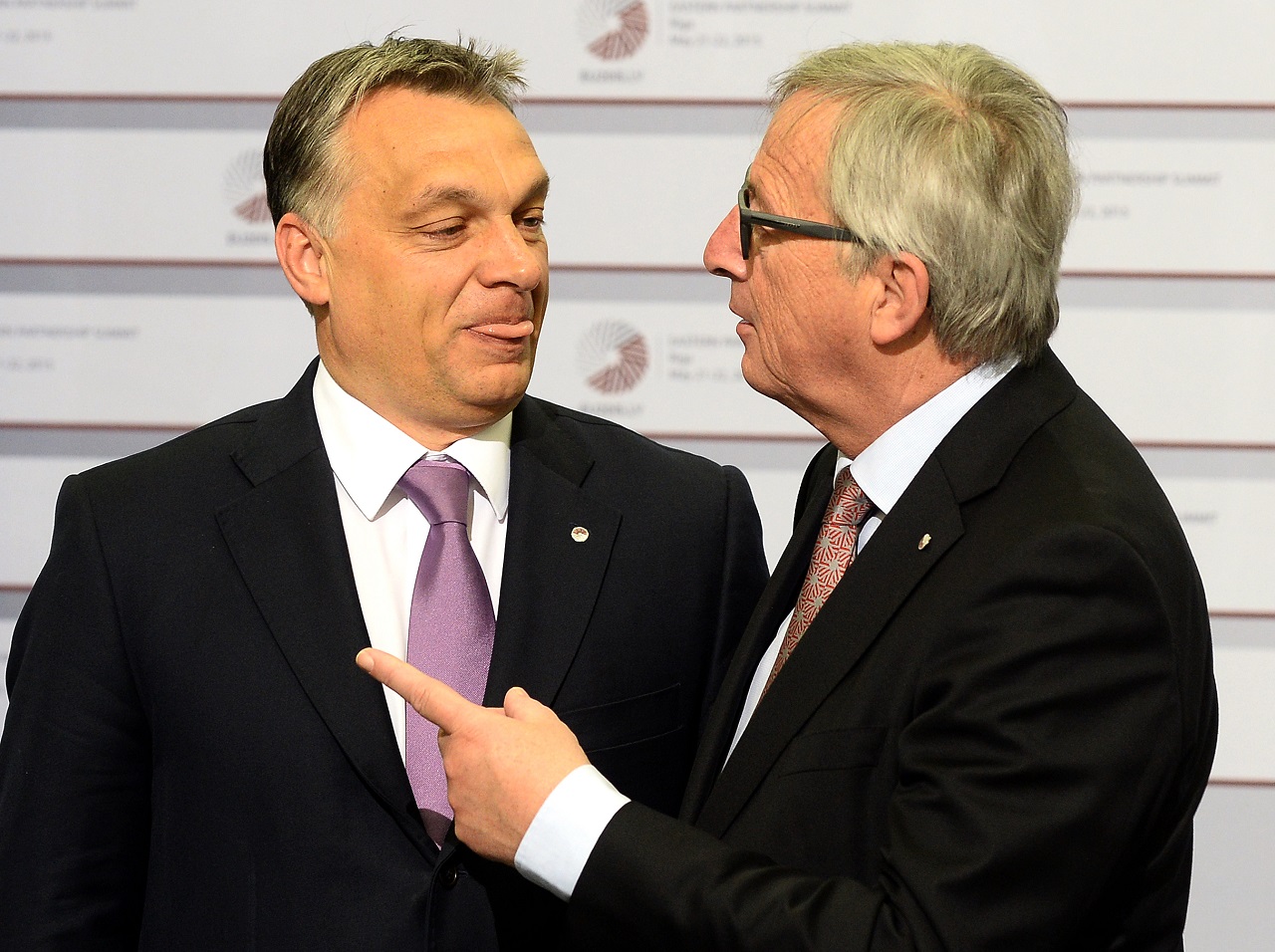
Hell-lo Dictator!

Hungarian Prime Minister Viktor Orban is greeted by President of the European Commission Jean-Claude Juncker on the second day of the fourth European Union (EU) eastern Partnership Summit in Riga, on May 22, 2015 as Latvia holds the rotating presidency of the EU Council. EU leaders and their counterparts from Ukraine and five ex-Soviet states hold a summit focused on bolstering their ties, an initiative that has been undermined by Russia's intervention in Ukraine. AFP PHOTO / JANEK SKARZYNSKI

Prime Minister Orbán returns greeting from European Commission President Jean-Claude Juncker at the Eastern Partnership Summit in Riga, Latvia          (photo: AFP).

On May 21, 2015, European Commission President Jean-Claude Juncker, the top European Union-level official, individually greeted the heads of all delegations attending the Eastern Partnership Summit in Riga, Latvia.

Standing on stage between Prime Minister Donald Tusk of Poland and Prime Minister Laimdota Straujuma of Latvia, Juncker commented in a loud, jocular voice as Prime Minister Viktor Orbán of Hungary approached: “the dictator is coming.” Juncker then extended his arm to shake hands and addressed Orbán directly as “dictator” and playfully slapped him on the side of the head (see video of greeting).

See entire post.

—————————————————————————————————————————————–
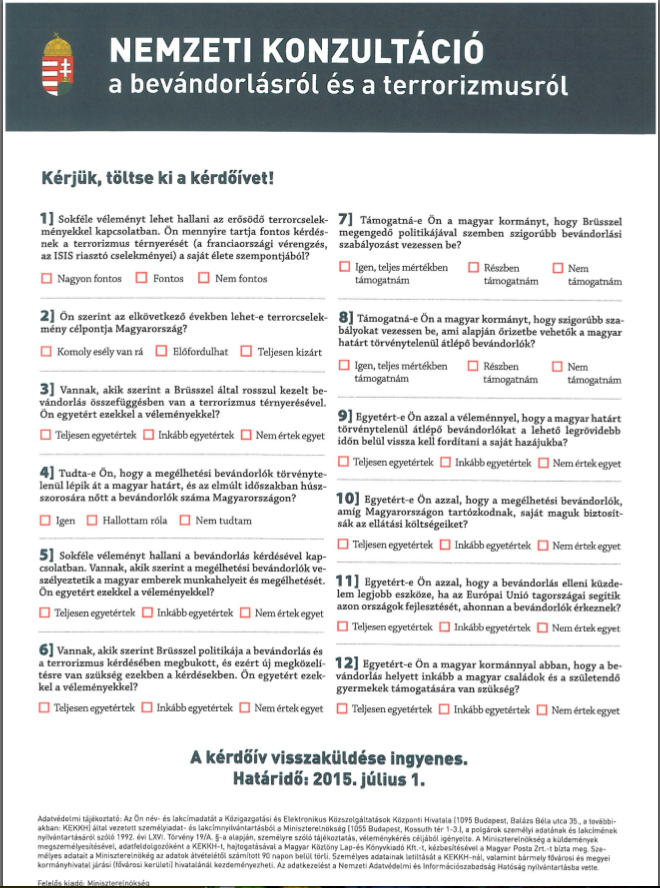
National Consultation on Immigration and Terrorism

Consultation2

Original questionnaire.

Consultation3

Original letter of introduction.

During the second half of May 2015, the Orbán government sent its National Consultation Regarding Immigration and Terrorism to eight million voters in Hungary. The government estimates that its newest national consultation will cost 960 million forints, or 3.14 million euros (source in Hungarian). Recipients will have until July 1, 2015 to return the questionnaire to the Prime Ministry in a provided postage-free envelope. Below is an Orange Files translation of Prime Minister Orbán’s introductory letter as well as the 12-question consultation.

LETTER OF INTRODUCTION 

Esteemed Compatriots! 

In 2010 we Hungarians decided that we would discuss all important questions with one another before we make decisions. This is why we initiated national consultations regarding the country’s new Fundamental Law, our social security and improvement of the situation of pensioners, among other things. And this is why we have now initiated national consultation on the question of subsistence [megélhetési] immigration. 

See entire post.

—————————————————————————————————————————————–

The Jobbikization of Fidesz (Act I): Reinstatement of the Death Penalty

Prime Minister Viktor Orbán (right):

Prime Minister Viktor Orbán (left) speaking at April 28 press conference (photo: MTI).

On April 22, 2015, a 21-year-old clerk was stabbed to death during the robbery of a National Tobacco Shop in the city of Kaposvár (southwestern Hungary, pop. 65,000).

During a press conference on April 28, Prime Minister Viktor Orbán said in response to a question about the murder (source in Hungarian):

Although we believed that we had settled questions connected to the Hungarian criminal code and criminal prosection when we introduced the three strikes and life imprisonment without parole, the issue of the death penalty must be kept on the agenda in Hungary and we must let it be known that we do not shy away from anything.

See entire post.

—————————————————————————————————————————————–

Two-Thirds Minus Two: the Jobbik Breakthrough

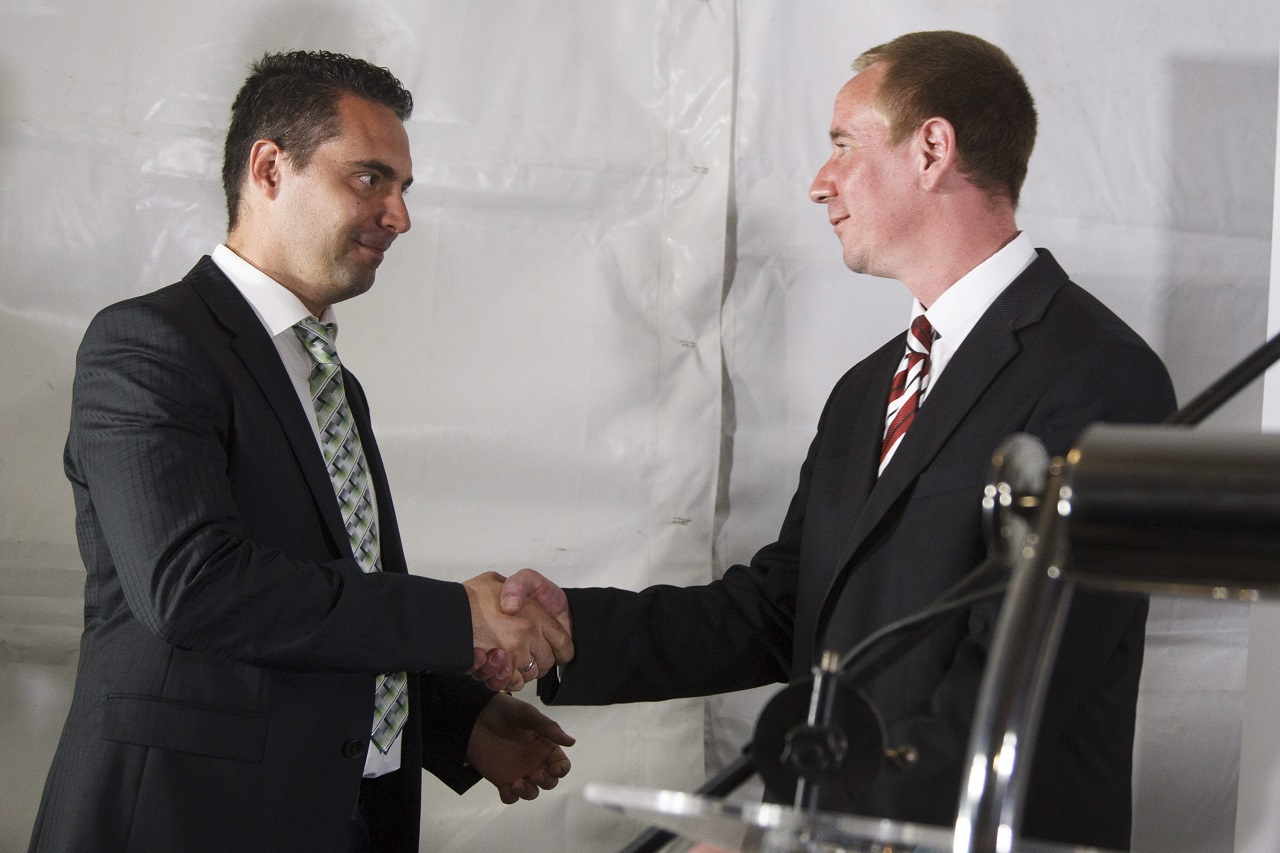
Jobbik President Gábor Vona (left) and victorious party- candidate Lajos Rig shake hands (photo: MTI).

Jobbik President Gábor Vona (left) congratulates victorious party-candidate Lajos Rig (photo: MTI).

On April 12, 2015, radical-nationalist Jobbik party candidate Lajos Rig narrowly defeated his FideszChristian Democratic People’s Party (KDNP) rival in a National Assembly by-election in Veszprém County.

Rig thus became the first Jobbik candidate ever to win a National Assembly election. The other 23 representatives in the current Jobbik caucus and all party representatives in the previous parliamentary cycle gained their seats in the National Assembly via party lists (see National Assembly Election System).

Fidesz-KDNP candidates have lost both by-elections held since 2014 National Assembly elections (see Two-Thirds Minus One). The governing alliance has thereby forfeited the second consecutive two-thirds supermajority it commanded in Hungary’s parliament.

See entire post.

—————————————————————————————————————————————–
Interview: Jobbik President Gábor Vona

8285-400x500

Jobbik President Gábor Vona (photo: alon.hu).

Below is an Orange Files translation of the final two-thirds of an interview that a journalist from the Lajos Simicska-owned newspaper Magyar Nemzet conducted with Jobbik President Gábor Vona at the end of March 2015  (source in Hungarian). The journalist’s initial question in the translated text refers to Vona’s call in a major speech earlier this year for reconciliation among the sharply divided political factions in Hungary (see Taking the Ball) and to two incidents involving Jobbik officials that surfaced in the Hungarian media recently: Mezőtúr Municipal Council member János Kötél’s anti-Gypsy Internet postings and National Assembly representative Gergely Kulcsár’s spitting on the Shoes on the Danube Bank Holocaust memorial in Budapest (sources A and B in Hungarian).

See entire post.

—————————————————————————————————————————————–

“Life Instinct” or Insider Trading?

moszkva-szijjarto

Quaestor President-CEO Csaba Tarsoly (left) and External Economy and Foreign Affairs Minister Péter Szijjártó officially open the Moscow Hungarian Trade House in April 2013 (photo: MTI).

On March 9, 2015, the External Economy and Foreign Affairs Ministry-operated Hungarian National Trade House (Magyar Nemzeti Kereskedőház) withdrew 3.8 billion forints in government bonds from Quaestor Securities just hours before the securities unit of the Budapest-based brokerage announced that it had initiated bankruptcy procedures against itself (sources A and B in Hungarian).

The Quaestor unit attributed its bankruptcy to an unmanageable spike in demand from its clients to redeem securities from the company following the Hungarian National Bank’s partial suspension of the operational licenses of the Buda-Cash Brokerage on February 24 and of Hungária Securities on March 6 on suspicion of fraud (sources A, B and C in Hungarian).

However, on March 10 the Hungarian National Bank announced that it had partially suspended the operational license of Quaestor Securities on suspicion of securities fraud as well (source in Hungarian).

See entire post.

—————————————————————————————————————————————–

Siss-boom-BANG!

First new photograph of Simicska in 12 years.

Lajos Simicska plans his next move (Magyar Narancs)

On March 8, 2015, oligarch Lajos Simicska conducted interviews with the moderate pro-government website Mandiner and the opposition television station ATV. During the interview with Mandiner, Simicska suggested that Prime Minister Viktor Orbán may have provided Hungary’s communist-era intelligence services with information, perhaps as an enlisted informant, about him and others when they served in the Hungarian People’s Army together in the city of Zalaegerszeg (western Hungary, pop. 60,000) in 1981 and 1982.

Simicska indicated in the interview that files proving Orbán’s collaboration with communist-era intelligence services could have been taken to the Soviet Union at the time of the System Change and that President Vladimir Putin of Russia might be using them to blackmail the prime minister.

See entire post

—————————————————————————————————————————————–
Two-Thirds Minus One

Independent candidate Zoltán Kész celebrates his victory in the February , 2015 Veszprém by-election (photo: Magyar Nemzet).

Zoltán Kész celebrates his victory in the February, 2015 Veszprém by-election (photo: Magyar Nemzet).

On February 22, 2015, opposition-supported independent candidate Zoltán Kész won a by-election held in the city of Veszprém (west-central Hungary, pop. 61,000) and surrounding communities to fill the National Assembly seat that former Minister of Public Administration and Justice Tibor Navracsics vacated following his appointment to the European Commission.   

Kész won the election with 42.6 percent of the vote, defeating his FideszChristian Democratic People’s Party (KDNP) rival, runner-up Lajos Némedi, by nearly 11 percentage points (source in Hungarian). 

See entire post.

—————————————————————————————————————————————–