Early Report from the Front

Opening the polls in Budapest.

Opening the polls in Budapest.

The blueness of day has began to materialize on the streets of Budapest. The air is dank and dirty, the pavement wet from a light overnight rain. Soggy cartons, tattered food wrappers, empty bottles and cans, the fresh refuse of a Saturday night in the city. 

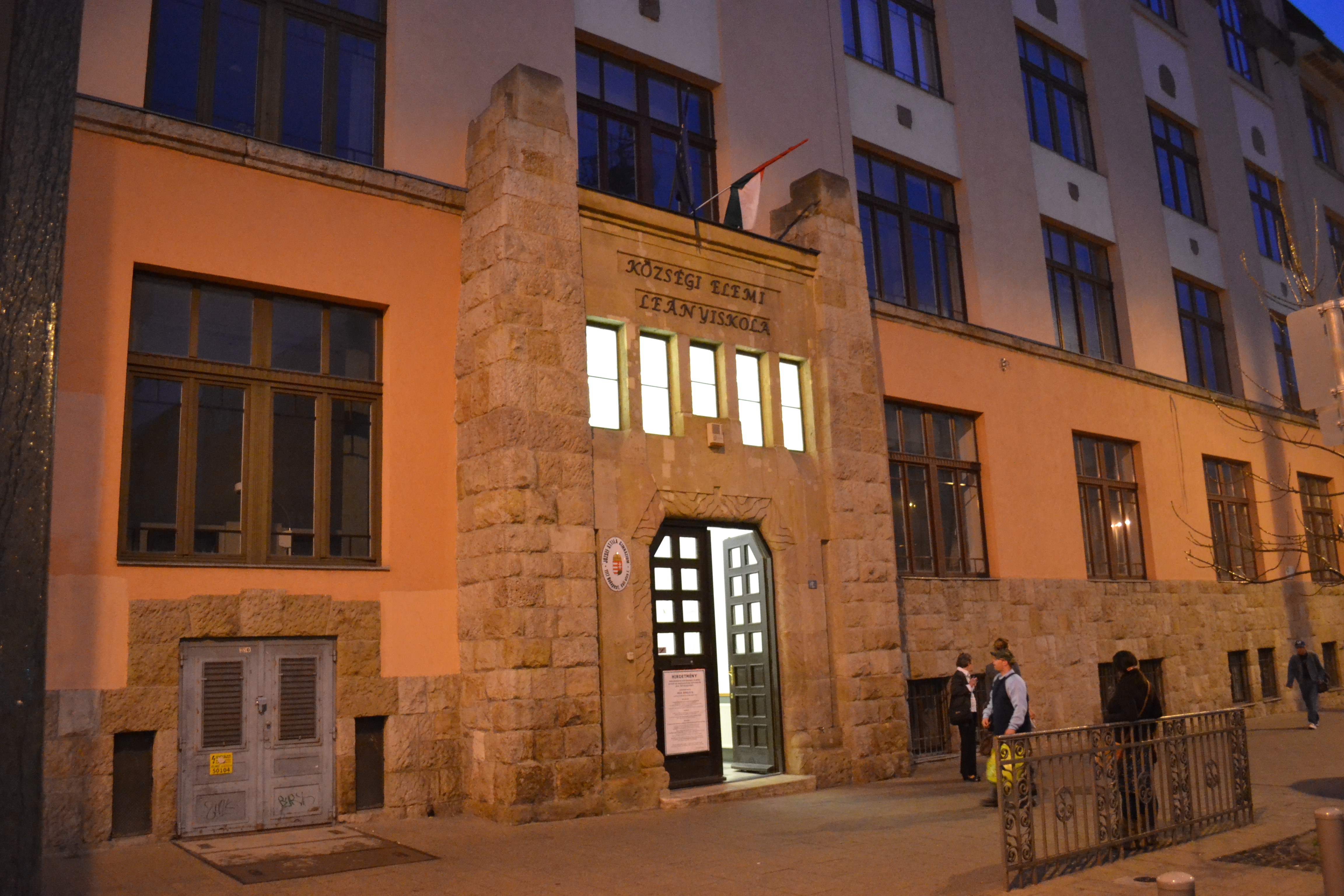
The polling station in the new Attila József High School has just opened. Orange Files steps in, finds the room for the voting district designated on the registration notice: the second voter in the district, he watches the first voter and spouse ceremonially check all three ballot boxes before election officials to ensure that they haven’t been pre-stuffed. 

The officials close the boxes and tie them shut with red, white and green ribbon. Hungary’s 2014 National Assembly elections have officially begun. 

Orange Files had always heard—and doubted—that many voters do not actually know whom they will vote for before they step into the voting booth. On this morning, he is living proof of this claim: all of the modern democratic parties have splintered into small factions struggling for survival or joined larger party-conglomerations that still harbor unseemly elements from Hungary’s authoritarian past (but at least not from its authoritarian present). 

Pull the curtains behind, lay two large ballots on the stand—a small one listing seven individual candidates from the voting district and a very large one listing the eighteen parties that have qualified for national party-list voting. 

Green? Red? Split ticket? National Gypsy Party just so you can say you did it? Go with the feeling, place the Xs in the Os and get out. 

On the way down the hall the little girl asks her parents: “Who did you vote for?” 

Orange Files National Assembly election update from the 25th subdistrict of the 2nd voting district of Budapest as of 6:15 a.m.: Politics Can Be Different (LMP) 1; Change of Government (Kormányváltás) 1; Fidesz 0, Jobbik 0; all others 0. 

—————————————————————————————————————————————–

Keep the Message Simple

The Orbán reelection campaign has been based on the principle that the key to effective political communication is to keep the message simple.

The Orbán campaign’s main election slogan: 

Only Fidesz!

(Csak a Fidesz!) (source in Hungarian).

Prime Minister Orbán explaining why “we need every single vote” during April 1 campaign speech:  

Big victory, big future; small victory, small future.

(Nagy győzelem nagy jövő, kis győzelem kis jövő.) (source in Hungarian).    

Prime Minister Orbán’s summary of the Fidesz election program on his personal Facebook site: 

[We will] Continue.

(Folytatjuk) (source in Hungarian).

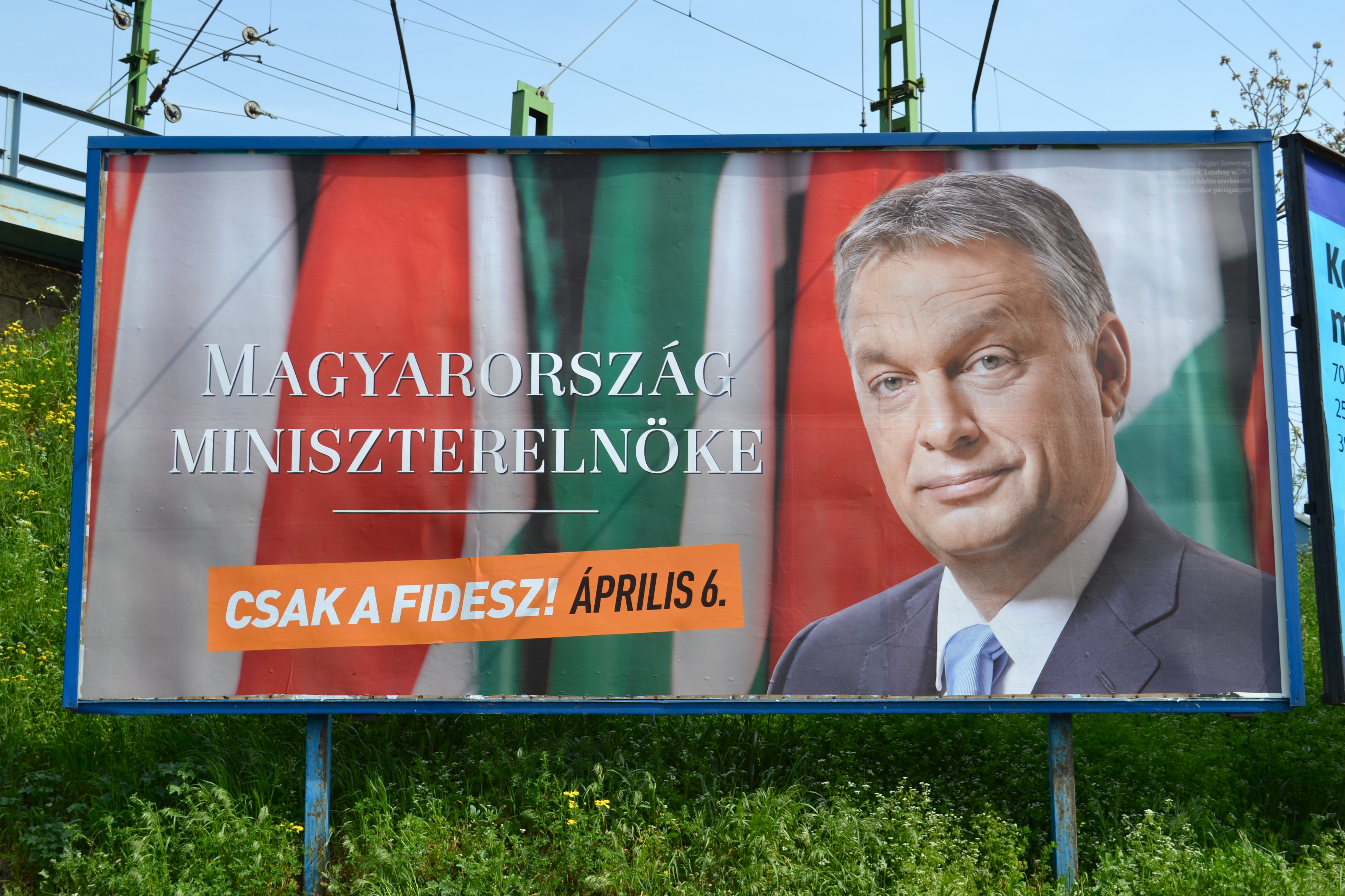
The main Orbán reelection sign: 

HUNGARY'S PRIME MINISTER. ONLY FIDESZ! APRIL 6. (Orange Files photo)

HUNGARY’S PRIME MINISTER.
ONLY FIDESZ! APRIL 6.
(photo: Orange Files)

—————————————————————————————————————————————–

Not with a Whimper

Peace March participants just off the bus from Dunaharaszti.

Peace Marchers just off the bus from Dunaharaszti.

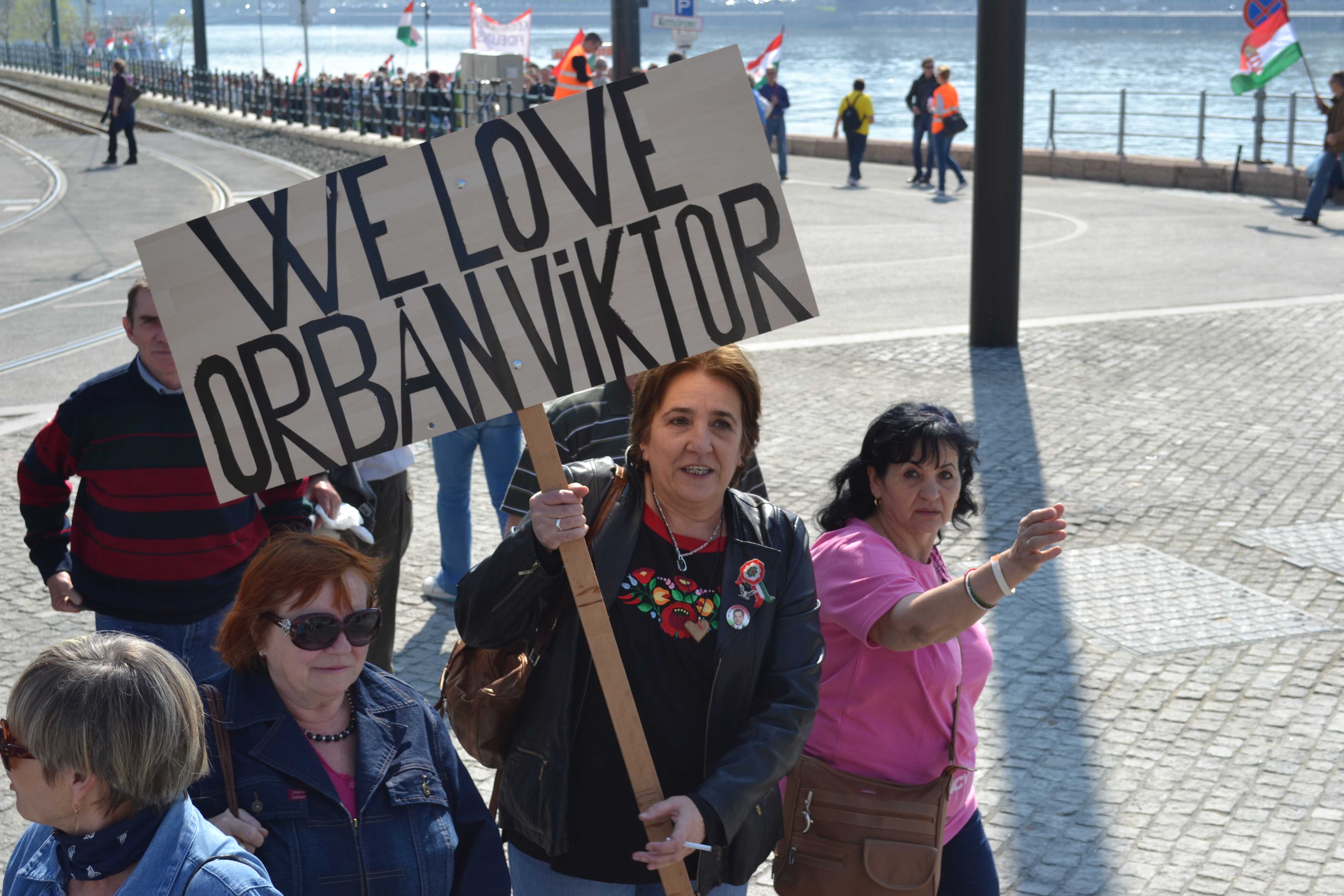
Bus after bus pulls up to the Lower Quay along the Danube River to let Peace Marchers off: they have come from the provinces, what they call in Hungarian “the country” (vidék), to show support for their beloved prime minister and quasi-messiah, the man who has guided them to the promised land of Hungarian national self-determination and self-respect; the great leader who has led them in battle against western banks ( i.e. the  IMF) and organizations (i.e. the EU) and their socialist-liberal accomplices in Hungary. “We love Orbán Viktor” reads the sign in the hands of a lady just off a bus from Dunaharaszti.

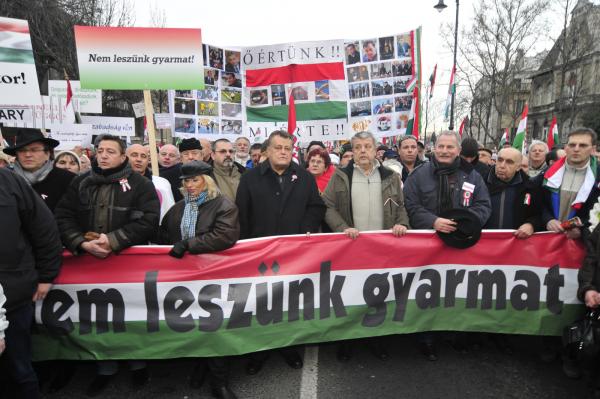
And they do love him—this is the essential difference between the Peace March demonstrations of the Orbán era and the May Day parades of the communist era: the hundreds of thousands of mostly rural Peace Marchers are voluntary and enthusiastic participants who pay for the bus transportation to Budapest out of their own pockets, while most of the May Day paraders were obligatory actors in a centrally orchestrated pageant of support for a system toward which most of them felt either indifference or aversion. 

The similarities between the Peace March processions and May Day parades are nonetheless striking: mass demonstrations of support for highly centralized, anti-democratic governments that face no threat whatsoever to their control over all aspects of the established political system.

DSC_0664

Peace March organizer András Bencsik.

A beautiful, warm spring afternoon, the first short-sleeve day of the year. The text on the lead banner reads “The Country is One – April 6, 2014” in reference to next weekend’s national election that will likely provide Fidesz with another two-thirds super-majority in the National Assembly. Peace March organizers hold the banner in their established positions: Bayer; Fricz; Stefka, Széles, Csizmadia and Bencsik (see Peace March Demonstrations). Fluorescent-vested security personnel push ahead with a rope stretched across the street to keep photographers from impeding the progress of the march; snap after snap on the backpedal down Bajcsy-Zsilinszky Avenue, all of the banner holders make eye contact: Bencsik, the inveterate showman, waves, shows thumbs up and smiles mockingly for the camera, Bayer and his wife regard the photographer with suspicion, while “Bulldog” Széles presents the challenging face, blinking, nodding, powerful jawbone always on the move.

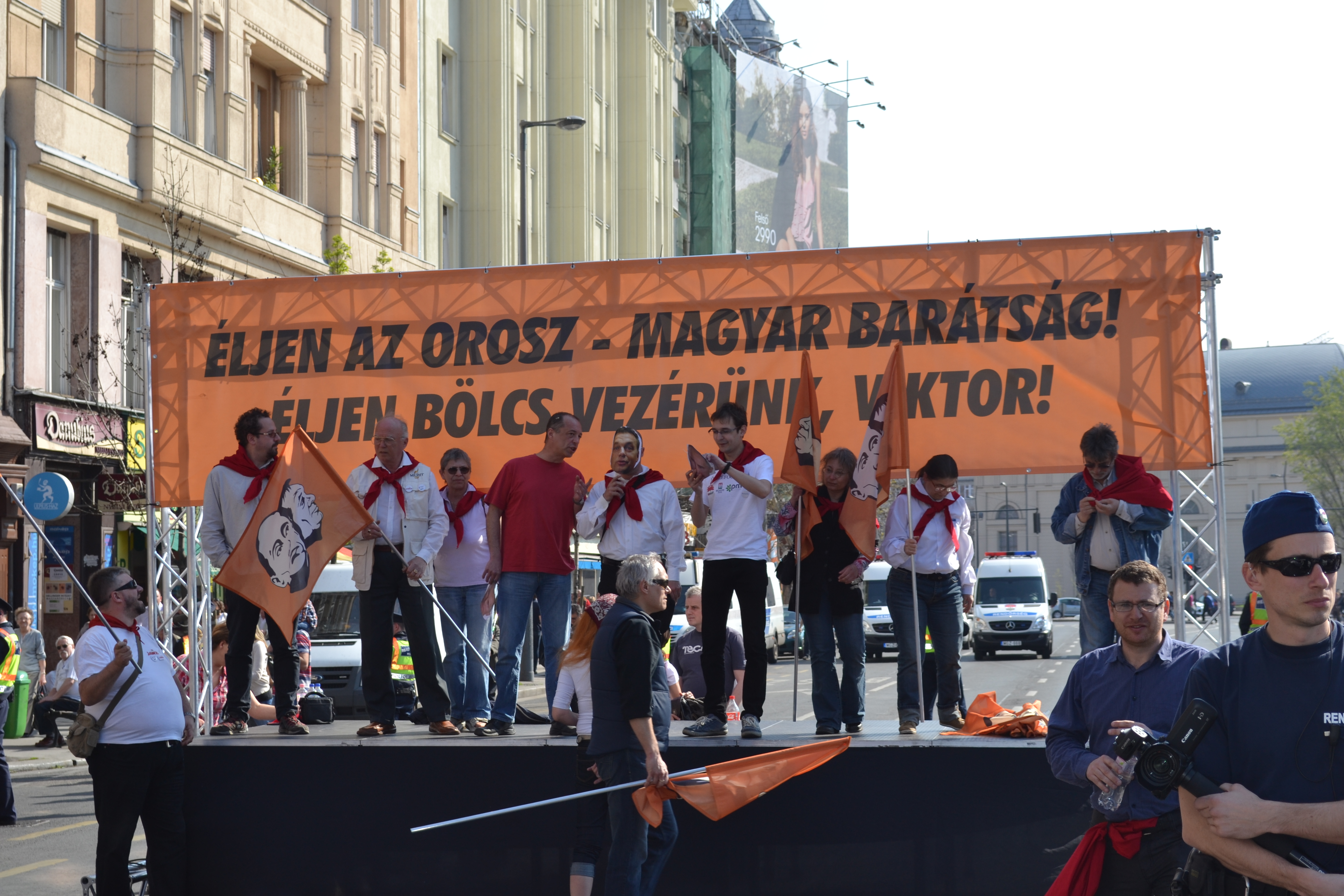
Long LIve Russian-Hungarian Friendship! Long Live Our Wise Leader Victor!

Long Live Russian-Hungarian Friendship! Long Live Our Wise Leader Viktor!

Pro-Fidesz and opposition sources will issue widely varying estimations regarding the number of participants: whatever the precise figure, it was again one hell of a lot, more than one-hundred thousand and maybe two- or three-hundred thousand. Who can keep count when there are so many? 

The signs are less hostile than at previous Peace Marches, mostly just Orange  ones reading”Fidesz”  and images of the Hungarian flag with the words “Vote” and “April 6.” A small group of counter-demonstrators wearing red Pioneer-movement neckerchiefs, the same ones who appeared at Prime Minister Viktor Orbán‘s March 15 speech (see Ides of March),  has set up a stage at the end of Bajcsy-Zsilinszky Avenue under a banner that reads “Long Live Russian-Hungarian Friendship! Long Live Our Wise Leader Viktor!” The comparison between the Fidesz and communist systems has clearly hit home: marchers hiss and grumble as they turn past stage on their way up Andrássy Avenue. 

The Peace March proceeds down Andrássy Avenue toward Heroes' Square.

The Peace March proceeds down Andrássy Avenue toward Heroes’ Square.

Amid the mass of mostly elderly voters from the provinces on Heroes’ Square, two of the most boring political speeches one can imagine, one from the French president of the European People’s Party and one from the president of the Alliance of Vojvodina Hungarians, before Prime Minister Orbán steps to the microphone to repeat the message he has honed so well over the years and which exercises such a mesmerizing effect on his supporters: revolution in the voting booth, eternal struggle against Hungary’s adversaries, national unity in a hostile world, continual fight against the treachery and corruption of the post-communists.

Unchanging messages that will sustain this overstrung system, a perfect reflection of its creator, until one day four years or eight years or ten years from now when it suddenly flies apart.  

See Orange Files photo gallery of Peace March. 

—————————————————————————————————————————————– 

Frack It to Me Baby!

State Secretary Szijjártó (center) with his new friends.

State Secretary Szijjártó (center) with his new friends.

On March 17, Prime Ministry State Secretary for Foreign Affairs and External Economy Péter Szijjártó declared during a ceremony marking the start of an expansion of the truck-wheel plant that U.S. aluminum company Alcoa operates in the city of Székesfehérvár: “Essentially we are also together here today in order to write another chapter in the success story of Hungarian-American economic cooperation” (source in Hungarian at 11:14).

This statement, though referring specifically only to economic cooperation, nevertheless signified the first time that, beyond protocol and formalities, anybody in the second Orbán government had referred to U.S.–Hungarian relations in genuinely positive terms as a “success story” since coming to power in 2010.

The reason for this turnabout is that Hungary is interested in the possibility of importing gas from the United States as a means of reducing its dependence on the import of gas from Russia via Ukraine.

On March 11, State Secretary Szijjártó met with United States Deputy Assistant Secretary of State for Economic and Eurasian Affairs Hoyt Brian Yee and Deputy Assistant Secretary for Energy Diplomacy Amos Hochstein in order to transmit the government’s request that the U.S. Congress act as soon as possible to expedite the process of authorizing U.S. gas exports to Europe (source in English).

Szijjártó’s meeting with the U.S. officials took place three days after the United States ambassadors of the Visegrád Group alliance of Poland, Czech Republic, Slovakia and Hungary, all of which are heavily dependent on the import of gas from Russia (source in English), sent a letter to U.S. House of Representatives Speaker John Boehner asking Congress to pass a legislative bill that would eliminate current impediments to the export of gas to states with which the United States has not concluded free-trade agreements, which includes all countries of Europe (source in English).

Fracking shale gas in North Dakota.

Fracking shale gas in North Dakota.

The United States has among the largest reserves of shale gas in the world (source in English). Production of shale gas, which is extracted through a process called hydraulic fracturing, or “fracking,” has risen dramatically in the United States over the past few years and will continue to increase in the future, making it possible for the country to export gas (source in English).

The U.S. Congress is considering legislation called the Domestic Prosperity and Global Freedom Act that would expedite the process of issuing Department of Energy permits for the export of gas to countries in Europe and elsewhere that do not have free-trade agreements with the United States, such as the North American Free Trade Agreement that facilitates U.S. gas exports to Canada and Mexico (source in English).

However, even if Congress approves the bill, gas-liquefaction and regasification terminals still need to be built in the United States and Europe in order for U.S. gas to be exported to European countries via tanker ship in the form of Liquefied Natural Gas (LNG). State-owned Croatian companies expect to complete an LNG regasification terminal on the island of Krk off the coast of Croatia in the northern Adriatic Sea in 2016 (source in English), while the first gas-liquefaction plant in the contiguous United States is expected to begin full-scale operation in 2017 (source in English).

Once regasified, the imported U.S. shale gas would be transported to Hungary via a new pipeline running across the country between Croatia and Ukraine (source in Hungarian).

According to a 2013 European Commission report, gas accounts for an uncommonly high 38 percent of the energy consumed in Hungary (source in English). Hungary imports just over 70 percent of the gas consumed in the country from Russia via a pipeline running through Ukraine (source in English).

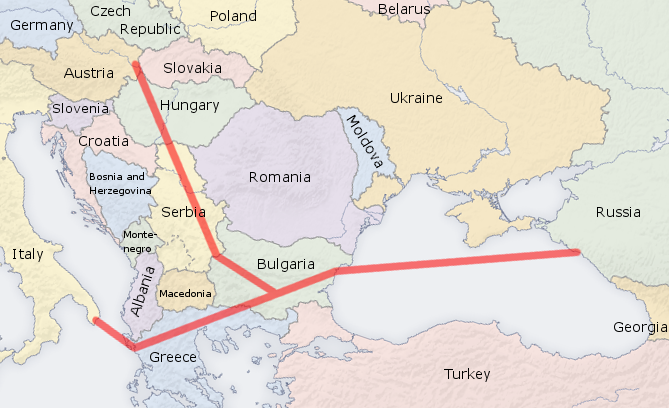
Route of the South Stream Pipeline.

Proposed route of the South Stream Pipeline.

The Orbán government previously hoped to reduce the dependence of Hungary on gas imported from the Russian state-owned energy company Gazprom through the import of gas from Azerbaijan via the planned Nabucco-West pipeline running to the country from Turkey, Bulgaria and Romania. However, the European Union- and United States-backed pipeline project may have suffered a fatal blow when the consortium of companies that operates the Shah Deniz gas field in the Caspian Sea off the coast of Azerbaijan decided in June 2013 to transport gas extracted at the field to Europe via the Trans Adriatic Pipeline rather than the Nabucco-West pipeline (source in English).

Gazprom was expected to begin delivering gas to Hungary through the South Stream pipeline via the Black Sea, Bulgaria and Serbia beginning in early 2017: this pipeline would reduce Hungary’s dependence on gas exported via Ukraine, but not on gas exported from Russia (source in English). However, European Union sanctions stemming from Russia’s annexation of the Autonomous Republic of Crimea in March 2014 have raised doubts regarding the eventual construction of this pipeline in EU member states (source in English).  

State Secretary Szijjartó prefaced his March 17 praise for the “success story” of U.S.-Hungarian economic relations with a reference to Russia’s annexation of the Autonomous Republic of Crimea (source in Hungarian):

Permit me since we are celebrating an event which takes place within an international economic sphere—namely that an American company has decided to expand its capacity in Hungary, more specifically Székesfehérvár—that we say a few words about the world around us and the impact it exercises upon us as well. You, just as I, are certainly paying attention to the important changes that have been taking place in the world. Over recent days, world economic and political power-relations have been undergoing a significant transformation. We can state without exaggeration that a new situation has arisen. And it is totally clear that if there is a new situation in the world, all the players in the world economy—not only companies, but countries as well—must react to it with a new strategy.    

Does this “new situation” signal the beginning of long-term improvement in relations between the Orbán government and the United States, a country with which the prime minister said Hungary had “problems of coexistence” during a 2013 speech to Hungarian diplomats (source in Hungarian)? Or do the recent friendly gestures of the Orbán government toward the United States represent a passing fancy that will give way to its previous cool contempt for the diminishing super-power once the Crimean crisis has passed? Orange Files suspects the latter scenario to be more likely, especially if construction proceeds on the South Stream pipeline carrying Russian gas to Hungary.  

—————————————————————————————————————————————–

Ides of March

DSC_0643March 15: national holiday in Hungary commemorating the outbreak of the 1848 revolution against Habsburg domination. Along with October 23, the national holiday commemorating the outbreak of the 1956 revolution against Soviet domination, the most important date on the country’s annual political calendar (see The Soft White Underbelly).

All the parties are active, their leaders hold speeches at various places throughout the center of Budapest. Politically involved citizens of the city are out and about, showing support for their side, checking out the adversary, curious to see what scandal and outrage this year’s happenings will produce.

2014: the FideszChristian Democratic People’s Party alliance is three weeks away from another landslide election victory. The only question is whether Prime Minister Viktor Orbán will get another super majority in the National Assembly, again giving him the power to implement his legislative agenda without impediment. All else is simply detail: how much will Jobbik gain, how much will the democratic opposition lose? Will Politics Can Be Different even get into parliament?

DSC_0576Across the Franz Joseph Bridge by bike, Orange Files rides toward the annual state commemoration at the National Museum, where Petőfi read his “National Song” at the start of the 1848 revolt. On Kálvin Square only red and white Polish flags: the Law and Justice weekly Gazeta Polska has organized another Great Trip to Hungary to show support for Prime Minister Orbán, just as it did for the second pro-government Peace March in 2012. Images of Pope John Paul II, the Kaczyński twins, banners in Polish, anti-EU signs in English, men in military uniforms, from the Polish-Soviet War perhaps?

Are they aware of Orbán’s rapprochement with Russia?

Through the main gate to the steps of the National Museum to get a good photograph of Orbán. His security has become much tighter than it used to be—it is no longer easy to get a good close-up of him. Standing in the crowd, camera in hand: a bellicose patriotic poem shouted in a shrill voice; a pop version of the “National Song” and some folk dancing; then down the stairs strides the short and girthy prime minister, right on past—dammit!—across a ramp to a platform overlooking Museum Avenue for his speech.

Excuse me, thank you, excuse me, thank you—press back out through the crowd to Museum Avenue, the speech begun in his throaty, constricted voice, a variation of the same one he has given a hundred times before: life and death struggle, identifying the enemies, always in danger, Labanc, Muscovites, global capital: “The weak and cowardly are no longer dealt into the game.”

DSC_0605Something interesting: a copse of orange flags with the heads of Orbán and Putin side by side. A dozen silent protesters, those around them shouting occasional threats and epithets.

“The word ‘utility-fee cut’ would not look good in the National Song, but it is easy to see that just as today the reduction of unjust and inequitable burdens was for them [the 1848 revolutionaries] the first and most important task.” 

“Hungary is the most unified country in Europe.”

Orbán makes no direct reference to the upcoming elections. He doesn’t need to because he knows he’s going to win, and win big.

The speech is over, the protesters furl their Orbán-Putin flags and give a short interview to a German-speaking reporter through an interpreter. They say they are associated with Bajnai. One of them has a bloody lip.

By bike toward Lajos Kossuth Street, cannot even find the Politics Can Be Different assembly. The sky is turning oddly overcast, the dust and refuse of spring swirls in puffs of warm breeze.

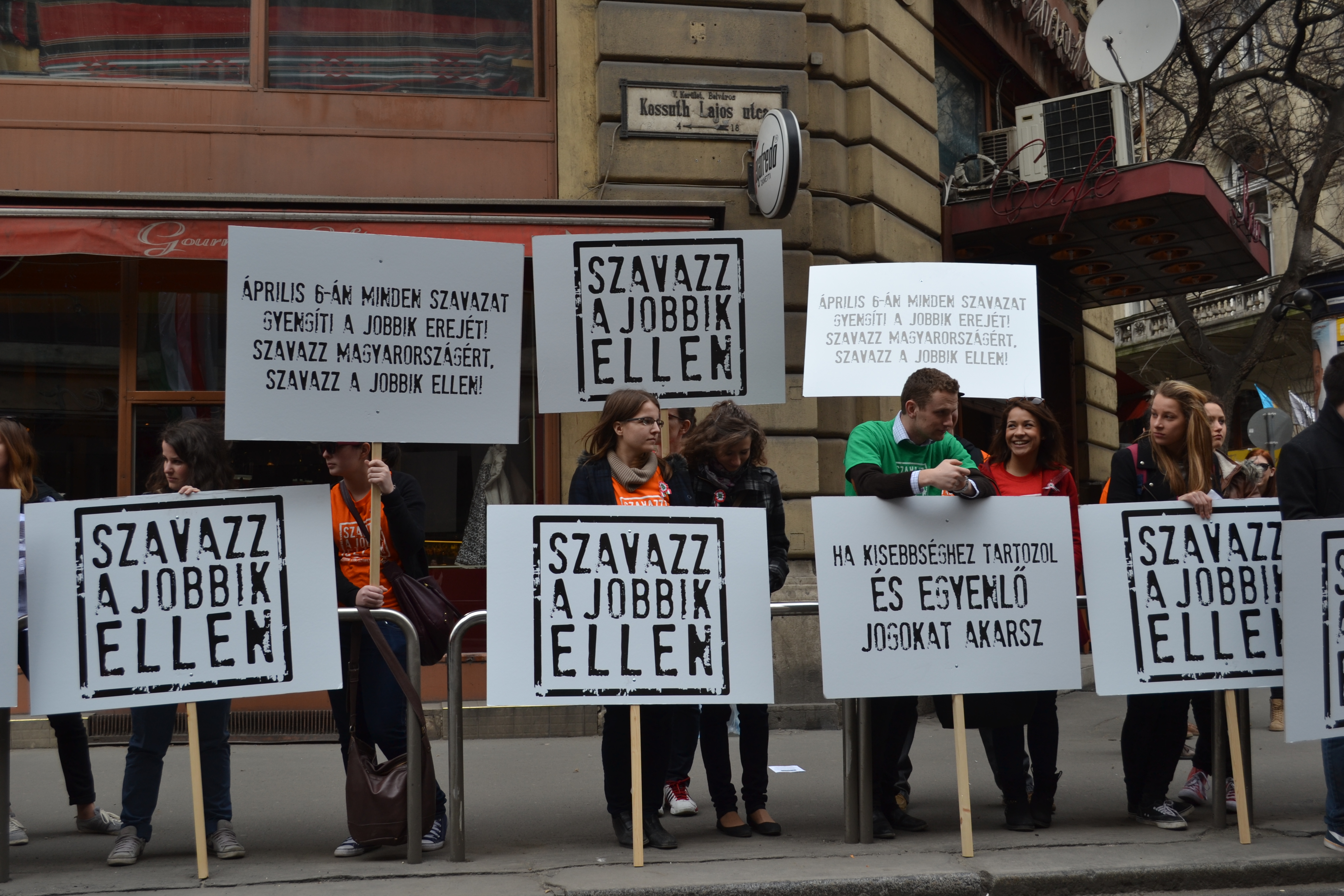
DSC_0626The Polish march past, there are a couple hundred young people lined up along the sidewalk wearing orange, red and green t-shirts and holding well-made signs that say “Vote Against Jobbik!” They say they are a Facebook group, but nobody seems to know who paid for all the shirts and signs. Fidesz has turned its sights away from the foundering  democratic opposition toward Jobbik in order to protect its two-thirds majority in the National Assembly. 

Coffee with an old friend and then the surprise of the day: the democratic opposition has cancelled its assembly due to expected high winds. Organizers in fluorescent vests announce the news on bullhorns. Lajos Kossuth Street is reopened to vehicle traffic. 

Just when you think it can’t get any worse, they find some way to sink even lower. The reason for the cancellation is not really rain and wind: it is that they have nothing to say, no hope in the elections, no reason for being in their present form. Gábor Fodor and the liberals are down at the Petőfi statue for a separate gathering. There are about a hundred people holding blue flags bearing the image of Lajos Kossuth. Fodor looks tired as he chats with elderly supporters, like he wishes he were somewhere else. 

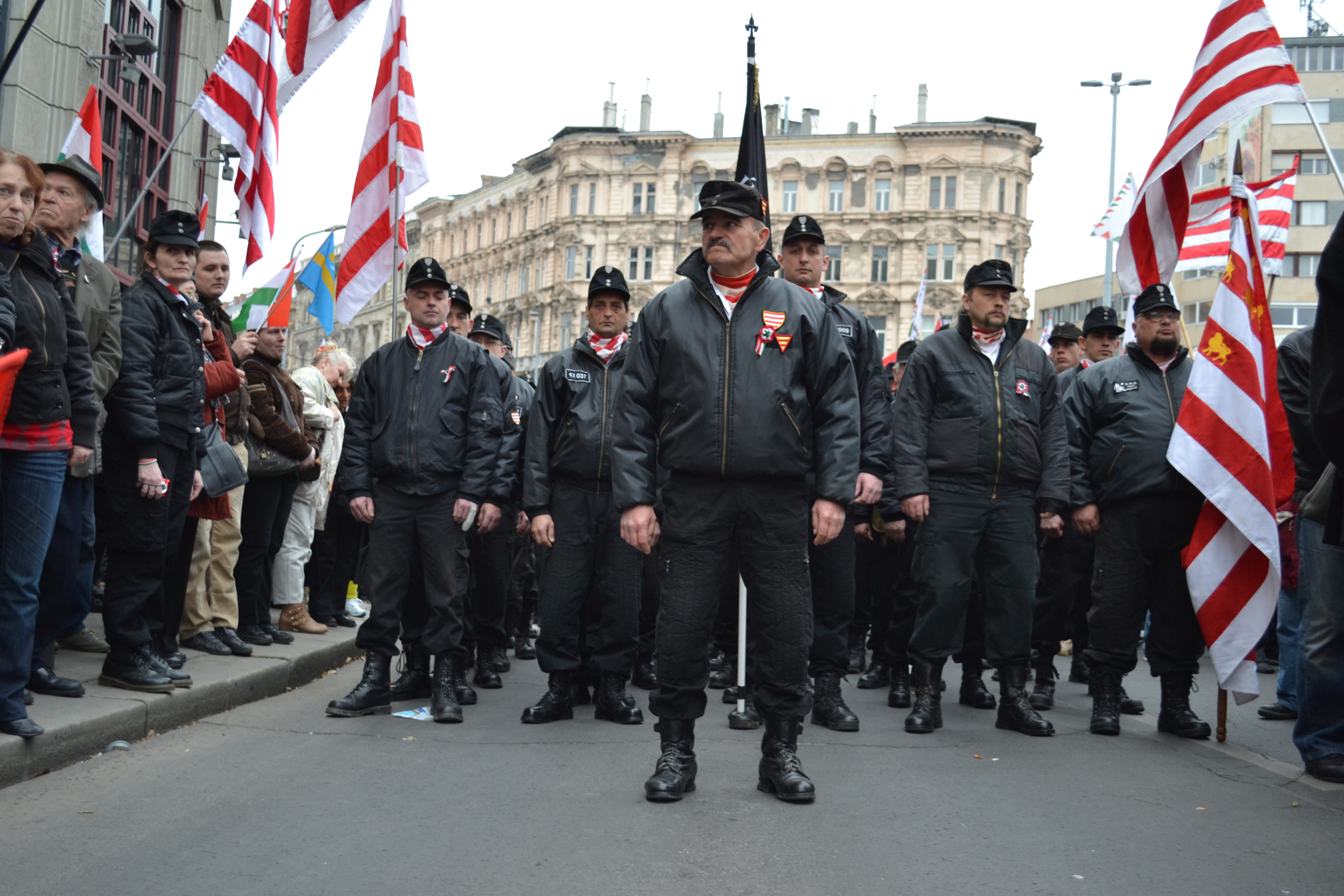
JobbikOver to the Jobbik assembly on Deák Square. Almost everybody in black; cracked and distorted faces, it has the feel of one-third penitentiary, one-third insane asylum and one-third school for the mentally challenged. The New Hungarian Guard is there. Vona, Előd Novák and the rest are there. At least they have the mettle to withstand a little stormy weather. They know where they want to go and are committed to getting there. And they just might do it.

A billow of red, white and green balloons rises into the air and dissipates slowly into the heavy gray clouds above.  

—————————————————————————————————————————————–

Too Close for Comfort

On February 28, 2014, Hungarian journalist Ferenc Szaniszló declared during his foreign-affairs program Világ-Panoráma [World-Panorama] on the pro-government television station Echo TV that Hungary must be prepared to reincorporate the Hungarian-inhabited regions of Subcarpathian Ukraine into the Hungarian state in the event that Ukraine collapses (see video in Hungarian and Orange Files transcription in English below): 

I welcome our kind viewers from Paso Robles, California to Stavanger, Norway, from Rochester in the state of New York to Moscow. Whether it wants to or not, Hungary must prepare to take back Subcarpathian Ukraine, at least its majority Hungarian-inhabited parts located alongside the Trianon border. In the event that Ukraine falls apart, we cannot pretend that we have nothing to do with the Verecke Pass, Munkács (Munkacheve) or the Carpathians. The new political powers in Ukraine are limiting use of the Polish, Russian and Hungarian languages once again. And it doesn’t really console us that the European Union also supports the genocidal, Hungarian-killing Beneš decrees. The Russian, Polish and Hungarian inhabitants of Ukraine cannot satisfy themselves with the fact that the European Union is supporting the Nazis and financing the fascists. It is the deeply held desire of Brussels that the new Ukraine be nationalist against the Russians, the Poles and the Hungarians, though internationalist toward the repositories of surreptitious global financial power—the EU, NATO and the IMF. And all of this from our money, because Hungary is also an accomplice to the EU, NATO and the IMF.

Revision of the territorial changes stemming from the 1920 Treaty of Trianon, according to which Hungary lost two-thirds of its Austro-Hungarian Monarchy-era territory to the newly created or expanded states of Czechoslovakia, Romania, Yugoslavia and Austria, has been one of the greatest political taboos throughout the region of east-central Europe since the end of the Second World War. The only voices that have openly advocated the reincorporation into Hungary of Hungarian-inhabited territory in surrounding countries have been those of the radical-nationalist Hungarian fringe arising from extra-parliamentary political organizations such as the 64 Counties Youth Movement (Hatvannégy Vármegye Ifjúsági Mozgalom) and extremist websites such as Kuruc.info.

Echo TV owner Gábor Széles (center) at the head of a pro-government Peace March processions in Budapest.

Echo TV owner Gábor Széles (center) at the head of a pro-government Peace March processions in Budapest.

Ferenc Szaniszló, though notorious for his outlandish conspiracy theories and racist innuendo, is nevertheless much closer to the Hungarian political mainstream than others who have made similarly explicit irredentist statements. Echo TV, though only the 40th most-watched television station in Hungary, is the most popular pro-government news station ahead of the more moderate Hír TV [News TV] (source in Hungarian). The owner of the Echo TV channel that broadcasts Szaniszló’s twice weekly program is staunchly pro-Orbán media tycoon Gábor Széles, who has been one of the main organizers of the massive pro-government Peace March processions that have taken place in Budapest about every six months since 2012.

Minister of Human Resources Zoltán Balog (left) presenting journalist Ferenc Szaniszló with a Mihály Táncsics Prize on March 14, 2013.

Minister of Human Resources Zoltán Balog (left) presenting journalist Ferenc Szaniszló with a Mihály Táncsics Prize on March 14, 2013.

On March 14, 2013, Orbán government Minister of Human Resources Zoltán Balog presented Szaniszló with a state-sponsored Mihály Táncsics Prize in recognition of outstanding achievement in the field of journalism. However, after several days of sharp protest from the socialist and liberal opposition and the US and Israeli ambassadors to Hungary, Balog requested on March 19 that Szaniszló return the prize, claiming that he had been unaware of the highly publicized incendiary statements the journalist had made during his program over previous years, including an anti-Gypsy diatribe in February 2011 for which the National Media and Infocommunications Authority fined Echo TV 500,000 forints (1,800 euros) for violating regulations prohibiting incitement to hatred (source in Hungarian).

Szaniszló complied with the minister’s request, asserting during his following television program “Israel has triumphed over Ferenc Szaniszló” (source in Hungarian).

Although Prime Minister Viktor Orbán and the members of his administration have been very careful to avoid making statements that can be construed as irredentist and have never given any indication that they, themselves, maintain anti-Gypsy or -Semitic attitudes, Ferenc Szaniszló’s open reference to the possibility of territorial revision on February 28 and previous racist commentary during his television program on the pro-government television station Echo TV provide evidence of the direct connections that exist between the Orbán government and the exponents of radical Hungarian nationalism.

—————————————————————————————————————————————–

Vlad Beyond Reproach

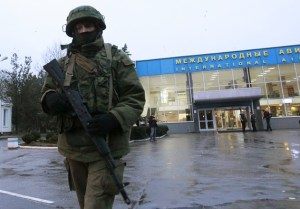
Russian soldier on patrol at Simferopol International Airport in Crimea.

Russian soldier on patrol at Simferopol International Airport in Crimea.

Prime Minister Viktor Orbán has been one of the few political leaders of European Union member states who did not explicitly condemn Russia’s military intervention in the Autonomous Republic of Crimea in Ukraine beginning on February 27, 2014. Prime Minister Orbán, in fact, said nothing at all about the intervention for a full week after it began. The following are Orange Files translations of the prime minister’s initial, cursory comment about the Russian military  intervention in Ukraine on March 3 and more detailed comment regarding the incursion on March 4. Note that more than 150,000 Hungarians live in western Ukraine, a region that is known in Hungarian as Subcarpathian Ukraine (Kárpátalja). 

 On March 3 Prime Minister Orbán said (source in Hungarian): 

Hungary is not part of this conflict. Hungarians are secure. In Hungary and in Subcarpathian Ukraine as well. And the Hungarian government is working to ensure that they remain secure. Moreover, our foreign minister is currently in Brussels. Hungary is part of the common European efforts aimed at achieving peace, security and respect for international law. We are working toward these objectives within the context of united European crisis-management.

On March 4 Prime Minister Orbán said (source in Hungarian):

For us the most important thing in this whole conflict is the security of Hungarians. This includes both Hungarians living in Hungary and Hungarians living in Subcarpathian Ukraine. This is the perspective from which we examine the events. And that is why we sent the foreign minister to Subcarpathian Ukraine—so that he could make it clear to the Hungarians who live there that the Hungarians living in Subcarpathian Ukraine can count on us. The second Hungarian interest according to which we are gauging our steps pertains to Ukraine itself. It is in the Hungarian interest that Ukraine be a democratic state. Thus we want a democratic Ukraine, a Ukraine in which Ukrainian citizens can feel secure and at home, including citizens who belong to minorities, thus the Hungarians as well. This is why Hungary cannot accept the annulment of the language law. We consider this to be an illegitimate decision and we insist that the rights due to Hungarians are not impaired as a result of the changes in Ukraine. With regard to a resolution of the situation, the Hungarian  viewpoint is a negotiated settlement. There is an obvious situation: Russia borders Ukraine from the east and the European Union from the west. From this it follows that Russia and the European Union must negotiate. We believe that negotiation is the only alternative to war. Therefore we want negotiation and not armed conflict—peace and not blood. In order to achieve this it is necessary that the two sides, the European Union and Russia, hold talks. Moreover, I am going to support the position in Brussels that the European Union must make an immediate response to Russian military movements. This response cannot be of military nature. The response must be decisive, immediate and of an integrative nature. . . . 

The fundamental messages contained in Prime Minister Orbán’s delayed responses to the Russian military intervention in Ukraine were, in order of their pronouncement: “Hungary is not part of the conflict”; “the most important thing in this whole conflict is the security of Hungarians . . . both Hungarians living in Hungary and Hungarians living in Subcarpathian Ukraine”; “Hungary cannot accept the annulment of the language law”; “Russia and the European Union must negotiate”; and finally “I am going to support the position in Brussels that the European Union must make an immediate response to Russian military movements.”

———

Prime Minister Donald Tusk of Poland.

Prime Minister Donald Tusk of Poland.

The leaders of other EU member states located in eastern Europe made the following initial statements regarding  Russia’s military intervention in Ukraine. Note that in 1994 the United States, the United Kingdom, Russia and Ukraine signed a diplomatic memorandum in Budapest in which Ukraine agreed to transfer all Soviet-era nuclear weapons located on its territory to Russia in exchange for the guarantee of Ukraine’s sovereignty and territorial integrity.

Prime Minister Donald Tusk of Poland said on February 27 (source in English): 

We need international pressure on those who would like to break the principle of non-interference and respect for territorial integrity of Ukraine . . . It is clear that our expectations are becoming reality, namely that Crimea and Ukraine’s territorial integrity are becoming crucial issues . . . Russia’s approach to this key challenge of preserving Ukraine’s integrity will be the test of Russia’s true intentions towards Ukraine’s future.

Prime Minister Tusk said on March 2 (source in English): 

Ukrainians have to find out today that they have real friends . . . Europe must send a clear signal that it will not tolerate any acts of aggression or intervention. . . . Therefore I will call on my European partners to exert pressure to  preserve peace on Russia, not on Ukraine. It is Russia that seems interested in an unstable situation in that part of the world.

Prime Minister Tusk also said on March 2 (source in English): 

We should be able to stop Russia in its aggressive moves precisely in order to avoid a conflict. . . . History showsalthough I don’t want to use too many historical comparisons—that those who appease all the time in order to preserve peace usually only buy a little bit of time.

President Miloš Zeman of Czech Republic said on March 1 (source in English): 

Although I fully understand the interests of the majority Russian-speaking population in the Crimea that was incorporated into Ukraine by an absurd decision made by Nikita Khrushchev in 1954, we have our experiences with the 1968 military intervention . . . I believe that any military intervention creates a deep ditch that cannot be filled during a generation.

Prime Minister Robert Fico of Slovakia said on March 1 (source in English): 

We call on all sides for maximum restraint, and for a political and diplomatic solution to the crisis.

President Traian Băsescu of Romania said on February 28 (source in English): 

As Romania has repeatedly said, Ukraine’s statehood, sovereignty, independence and territorial integrity are values in keeping with the public international law that must be observed by all states which recognized Ukraine’s independence in 1991, the more so the signatories of the 1994 agreement in Budapest.

President Băsescu said on March 2 (source in English): 

Romania considers that any presence of the Russian Federation’s troops on Ukraine’s territory, without its consent and violating the existing bilateral agreements and subsequent notifications, is an aggression against Ukraine. At this moment, we consider that Ukraine is being assaulted by the military forces of the Russian Federation. Romania considers that the signatory states to the 1994 Budapest Memorandum have the obligation to immediately start negotiations to restore international legality, including the Russian Federation ceasing any moves on Ukraine’s territory. This agreement between the U.S., Great Britain and the Russian Federation represents, in our view, alongside the relevant international legislation, the guarantee for Ukraine’s independence and sovereignty.

———
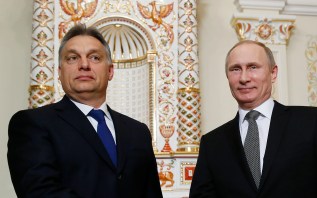
Orbán and Putin seal the Paks Nuclear Power Plant deal at the Russian president's residence near Moscow on January 14, 2014.

Orbán and Putin seal the Paks Nuclear Power Plant deal at the Russian president’s residence near Moscow.

The responses of these eastern European heads of state and government to Russia’s military intervention in Crimea are founded to a significant degree upon both common and specific historical experience and current geo-political and strategic considerations that place them in fundamental opposition to Russian expansionism in Europe: all five countries—Poland, Czech Republic, Slovakia, Hungary and Romania—are member states of an alliance, the European Union, that has come into growing friction with an increasingly assertive Russia; the Soviet Union occupied the eastern parts of Poland and Romania (Bessarabia) at the beginning of the Second World War pursuant to the 1939 Molotov-Ribbentrop Pact; the Soviet Union occupied all five countries for decades following the Second World War and imposed the communist political-system upon them; the Soviet Union furthermore invaded Hungary in 1956 and Czechoslovakia (the Czech Republic and Slovakia) in 1968 to suppress anti-Stalinist revolutions in those countries; and there is growing tension between Romania and Russia with regard to political influence over the Republic of Moldavia, the population of which is 70-percent Romanian-speaking and 10-percent Russian-speaking.  

The above factors compelled Donald Tusk of Poland and Traian Băsescu of Romania to vociferously condemn the Russian military intervention in Ukraine and Miloš Zeman of the traditionally more Russophile Czech Republic to issue a qualified condemnation of the incursion. Aside from Prime Minister Orbán, only manifestly pro-Russian Prime Minister Robert Fico of Slovakia did not express disapproval of Russia’s intervention in Crimea.
Prime Minister Orbán’s failure to condemn Russia’s military incursion in Ukraine is based on three factors that have superseded his formerly outspoken opposition to Russian expansionism: rejection of the new Ukrainian government’s annulment of the 2012 language law authorizing the use of minority languages, including Hungarian, in schools, courts and other government institutions in Ukraine; aversion toward the liberal democracy and free-market capitalism of the European Union and sympathy toward the authoritarianism and centrally guided capitalism of Vladimir Putin’s Russia; and the condition of economic and political subservience that Hungary assumed toward Russia when the Orbán government concluded an interstate agreement in January 2014 to have Russian state-owned nuclear-energy company Rosatom build two new reactors at the Paks Nuclear Power Plant with a 10-billion-euro loan from the state of Russia (see Deal of the Century).

—————————————————————————————————————————————–
Peace, Bread and Utility-Fee Cuts!

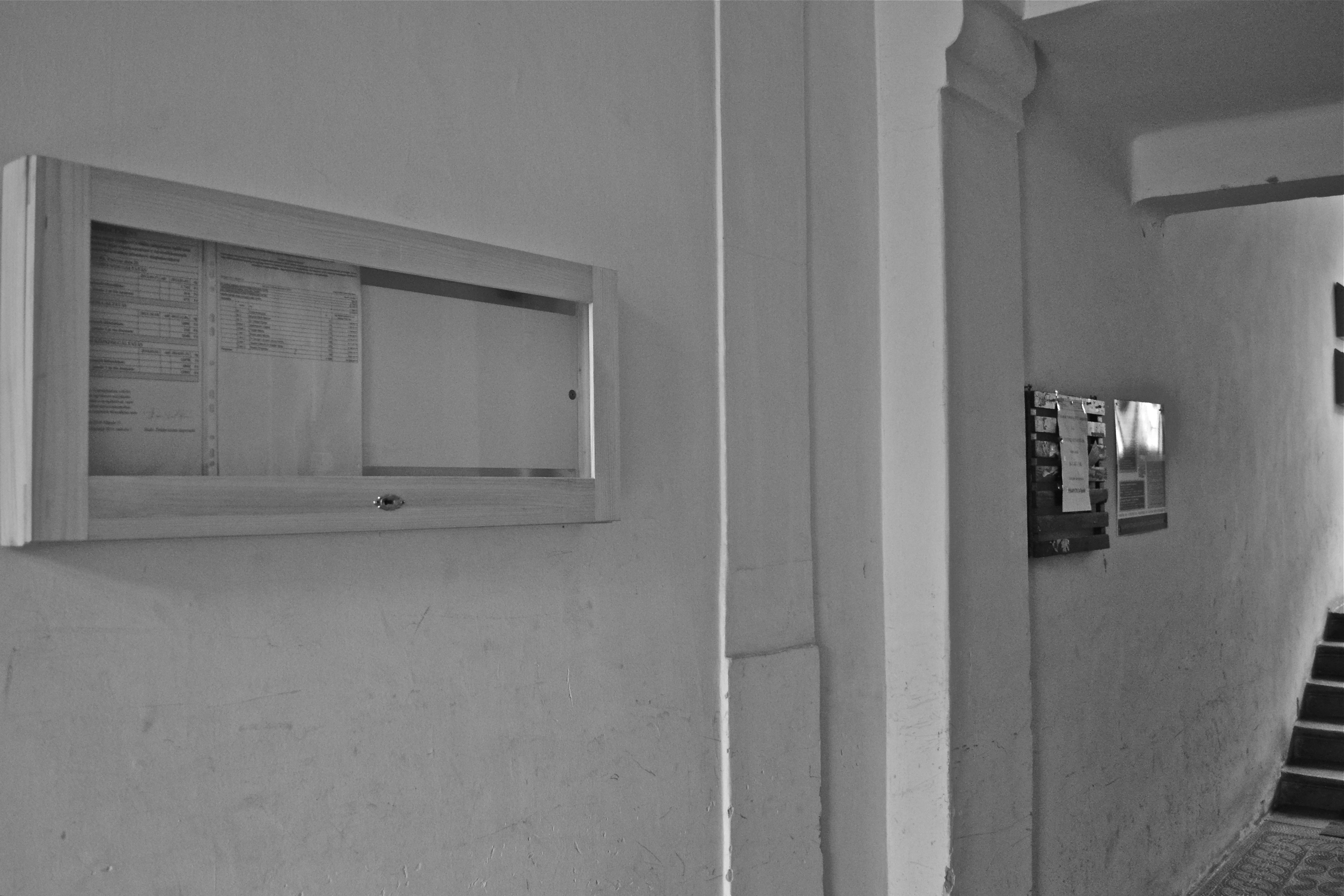
DSC_0400The caretaker at the residential building in Budapest where Orange Files is edited recently erected the mandatory lockable enclosure containing monthly itemized bills showing the precise amount that each resident has saved as a result of the Orbán government’s twenty-percent cuts in household fees for gas, electricity and district heating (see Minus 20 Everywhere). Residents had to pay the cost of the enclosure that must be placed in a “conspicuous (figyelemfelkeltő) and clearly visible” place in all residential buildings in Hungary pursuant to Law CCXXXI which the Fidesz-controlled National Assembly passed on December 17, 2013 (text of law in Hungarian). Residential-building caretakers are subject to fines of between 15,000 forints (50 euros) and 500,000 forints (1,600 euros) for non-compliance with the law (source in Hungarian). 

—————————————————————————————————————————————–
From Russia with Love

On February 20, the bloodiest day of clashes between anti-government Euromaidan protestors and police in Kiev, Ukraine, Hungary’s state-run Kossuth Radio broadcast the following report in Hungarian about the demonstrations during the station’s 2:00 p.m. news (source in Hungarian at 14:00): 

800px-Mr1

—–

—–

—–

—–

The following is an Orange Files translation of broadcast:

Passions have not calmed in Kiev. Snipers are shooting members of law-enforcement services from the roof of a hotel. The Ukrainian interior ministry is recommending that people do not go out onto the streets, because there are armed individuals there. Law-enforcement organizations have begun the process of locating and neutralizing the terrorists. According to the former deputy president of the Ukrainian secret service, anti-terrorism investigation applies to all Ukrainian citizens and only serves to further aggravate the situation that has developed in the country. According to the former representative, the anti-terrorism operation is essentially tantamount to the introduction of martial law. In Kiev the Metro is still not running—its entries have been blocked with big metal bars. Banks, shops and cafés are closed. Meanwhile Kiev Mayor Volodymyr Makienko announced that he is withdrawing from the governing party in protest against the bloodbath and fratricidal war taking place in the Ukrainian capital. Representatives from the governing party and the opposition as well as demonstration leaders have initiated the urgent convocation of parliament in order to resolve the grave domestic crisis. Representatives from the governing party have summoned opponents to discontinue violence and begin peace talks with German, Polish, Russian and American mediation.

Pro-European Union demonstrator in Kiev.

Pro-European Union demonstrator in Kiev.

Kossuth Radio aired this report as media throughout the rest of Europe focused the Ukrainian police’s use of live ammunition in an attempt to quell the increasingly violent anti-government demonstrations in Kiev, killing and wounding a large number of unarmed protestors in the process. The Kossuth Radio report does not cite the number of civilian casualties, at this time estimated to be around 60 dead and several hundred wounded over the previous 36 hours, referring to the Euromaidan demonstrators in a sentence without an identified source as “terrorists” whom law-enforcement authorities were “locating and neutralizing.” Nor does it mention any of the demands of demonstration leaders, notably the resignation of subsequently ousted president Viktor Yanukovych.

Kossuth Radio issued the following statement in response to criticism of the report (source in Hungarian):

The public media is reporting continually on the Ukrainian crisis. We use as sources for news both the opinions of the opposition and statements from the governing party as well as accounts from our reporters on location and from major world news-agencies. The report broadcast on Kossuth Radio’s 2:00 p.m. news on Thursday was likewise based on several various sources, including information from the Russia Today television station and the internet edition of a Russian daily newspaper. We are continually stating other opinions as well in the course of the radio’s news programs. News editors cannot express criticism of the reports arriving from various sources. Kossuth Radio has been subjected to several attacks as a result of the news it aired on a single occasion on Thursday. We draw the attention of those who have voiced criticism to the fact that they have seized upon a single report within an entire day’s programming, which included the broadcast of news reflecting numerous other points of view, though they do not mention these.

Orbán and Putin shake on the Paks deal.

Orbán and Putin meet in Moscow in January 2014.

The Kossuth Radio statement reveals that the station based its 2:00 p.m. news report on the anti-government demonstrations in Ukraine on Russian sources, including the overtly anti-Euromaidan news station RT (formerly known as Russia Today), though the original report did not cite these sources. The statement contends that Kossuth Radio presented news of the demonstrations from other perspectives in the course of other broadcasts during the day. This contention, even if true, does not negate the fact that Kossuth Radio’s report on the protests during their deadly culmination on the afternoon of February 20 was much closer to that of pro-Yanukovych sources from Russia than it was to pro-opposition European sources such as those from the United Kingdom and France.  

There are two reason that government-controlled Kossuth Radio broadcast this report essentially reflecting the official Russian stance toward the anti-government demonstrations in Kiev: first, the Orbán government wants to remain in favor with the Putin administration now that Hungary has signed an interstate agreement with Russia for a 10-billion-euro loan to build two new reactors at the Paks Nuclear Power Plant (see Deal of the Century); and second, there exists an obvious and forboding parallel between the pro-Russian Yanukovych government and pro-European Union demonstrators in Ukraine and the eastward-oriented Orbán government and the westward-oriented democratic opposition in Hungary.

——————————————————————————————————————————————

Conservative Ray of Hope

Sólyom33The conservative former President of the Republic László Sólyom voiced explicit criticism of the Orbán government’s recent agreement with the state of Russia to build two new reactors at the Paks Nuclear Power while speaking at a conference at the Hungarian Academy of Sciences in Budapest on February 18. Sólyom, a legal scholar who served as president of the republic from 2005 until three months after the FideszChristian Democratic People’s Party alliance came to power in 2010 and as president of the Constitutional Court from 1990 until 1998, said:

It is a fact that the signing of this extremely important agreement surprised not only the Hungarian people, but the Hungarian energy industry and even the government itself. It is also a fact that not only did preparations for the agreement took place in secret, but that all the data necessary in order to conduct an informed appraisal of the agreement has been classified as secret for a period of ten years. We encounter shoddy and contradictory arguments in [relevant] political communication. As president of the republic I publicly criticized the 2009 National Assembly resolution regarding preparation for the expansion of Paks [the Paks Nuclear Power Plant]. I emphasized that broad social debate based on comprehensive information must precede the decision. I continue to say that it is misleading to narrow the issue to the confines of a simple power-plant investment. The  horizon extends beyond next month’s electricity bill—people have the right to become familiar with the complexities and consequences of the decision. We must see, honored conference guests, that this is a decision of exceptional importance that will affect three or four generations. . . . This commitment will obviously have an impact on our foreign policy, our national strategy, on the assessment of us in the world and the European Union. When did the National Assembly debate this? . . . The secret preparations [for the agreement] within the Prime Ministry, the decision thrust upon the National Assembly without sufficient information, the so-called debate conducted in the presence of just a few representatives and the classification as confidential of the pertinent data for a period of ten years have produced nothing other than a crisis in the exercise of political power (source in Hungarian). 

——–

This is not the first time that Sólyom, a founding member of the national-conservative Hungarian Democratic Forum in 1987, has strongly criticized the Orbán-government. Sólyom described the Fidesz-KDNP-adopted Fundamental Law that replaced the 1949 Constitution on January 1, 2012, as follows: 

This constitution is like the National Theater building, which has nothing to do with modern theater design, is eclectic, bombastic and was pushed through by force in spite of unanimous protest from the architectural community. However, good performances can still be staged in the building if there are good actors, a good play and a good director (source in Hungarian). 

Sólyom voiced much harsher criticism of the Fourth Amendment to the Fundamental Law, which among other stipulations placed Temporary Provisions that the Constitutional Court had previously declared unconstitutional back into the law, declaring before President János Áder signed the amendment “That which is taking place is, in fact, not amendment of the constitution, but the stealthy introduction of a new constitution of another character” (source in Hungarian). 

Sólyom said later with regard to the Fundamental Law adopted shortly before Easter 2011 and the five amendments enacted over the first fifteen months after it came into effect: 

The name Easter [Constitution], the picture-book decorative edition and the table of the constitution (1) were unable to evoke the purifying experience of starting anew and immediately sank into obscurity. At the same time, it immediately became constitutional practice to make extensive amendments to the Fundamental Law based on daily expediency, which contradicted the officially encouraged notions of permanence, long-lasting foundations and authority (source in Hungarian). 

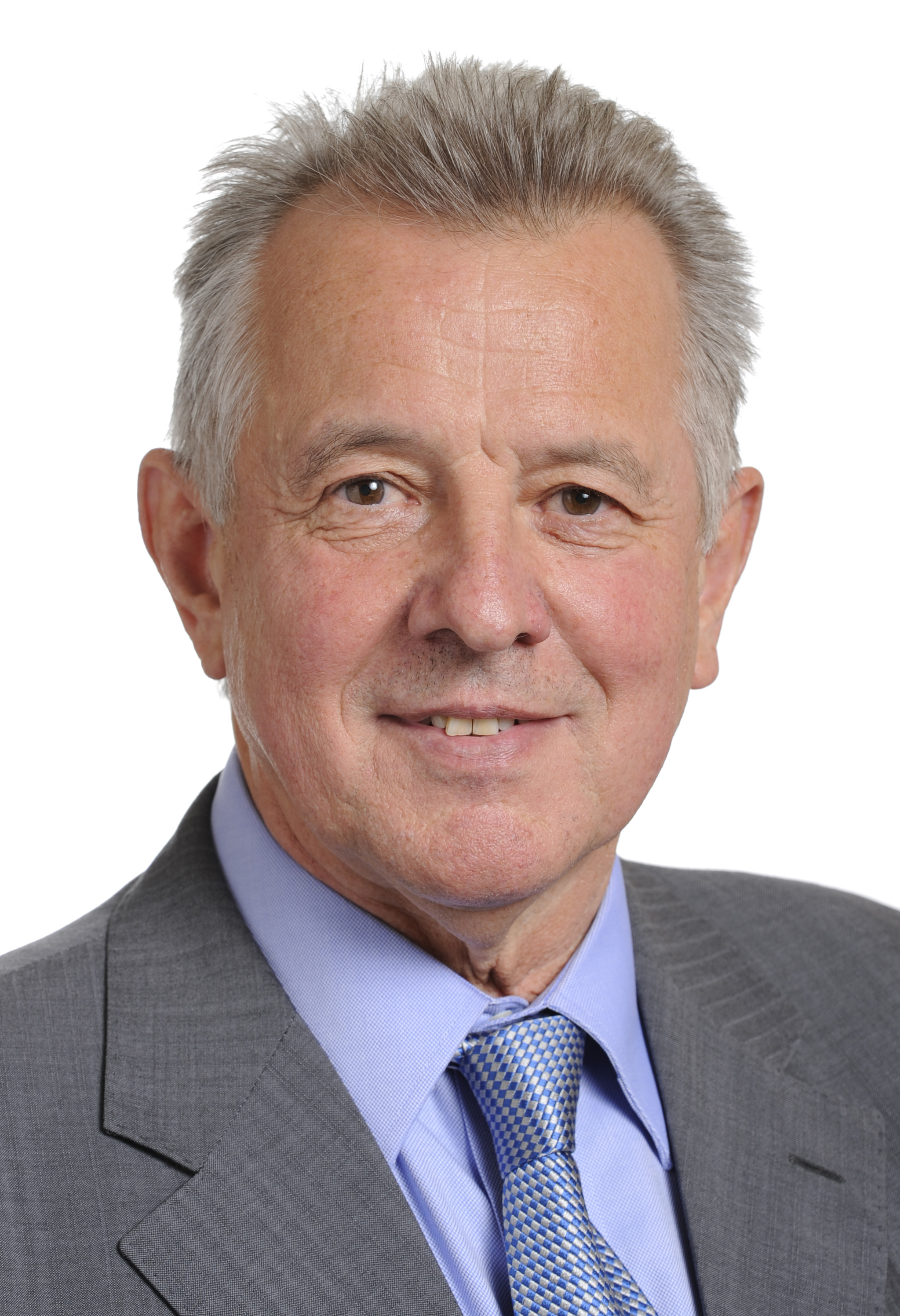
Former president Pál Schmitt.

Former president Pál Schmitt.

Sólyom, though quite close to the opposition green party Politics Can Be Different, has always been primarily conservative in his political outlook. He narrowly defeated the Hungarian Socialist Party candidate for president with the support of Fidesz in 2005. However, Prime Minister Orbán withdrew his previous support for Sólyom in 2010 after the president sent two Fidesz-KDNP-adopted laws back to the National Assembly for consideration in June of that year and another to the Constitutional Court for review in July.

Fidesz National Assembly representatives subsequently elected staunch Orbán loyalist Pál Schmitt to replace Sólyom as president of the republic when his term expired in August 2010. “I would not be an impediment to the government’s legislative momentum, but in fact would serve as a motor for it,” Schmitt said after his nomination (source in Hungarian). And indeed, over the 20 months Schmitt served as president until being forced to resign after the emergence of proof that he had plagiarized his Ph.D. dissertation, he signed every single law that came across his desk.

Former president Sólyom represents the small number of independent-minded Hungarian conservatives who do not uncritically support Prime Minister Orbán and Fidesz. Former president Schmitt represents the large number of Hungarian conservatives who never question the prime minister and his party. Pro-democracy, pro-European Union political forces will return to power in Hungary only when more of the country’s conservative voters begin to ask themselves if Prime Minister Orbán’s authoritarianism and turn toward the East really correspond to their traditional political values.

(1) Table placed at local-government offices in Hungary where citizens can apply for a free copy of the Fundamental Law. 

—————————————————————————————————————————————–